The CS:GO Source 2 fever dream, fueled by SteamDB leaks and data mining, hinted at Valve's long-awaited Counter-Strike 2 upgrade.
Back in the misty dawn of 2023, the Counter-Strike community found itself caught in a delicious fever dream. Every tiny SteamDB alteration sent shockwaves through Discord servers, and a single commit message could launch a thousand YouTube conspiracy videos. The object of this collective obsession? A mythical beast known simply as Source 2 CS:GO. Valve had been spinning this particular yarn for what felt like eons, dropping bread crumbs just small enough to drive data miners absolutely mental.
Anyone who’s followed Valve and the game knows that Gabe Newell operates on a timetable that laughs in the face of mortal calendars. Yet here was something different. A couple of weeks earlier, an Nvidia driver leak had already sent the rumor mill into overdrive, hinting that a new version of Global Offensive was cooking on the shiny Source 2 engine. Skeptics rolled their eyes, as they always do, but then Valve did something that could only be described as a deliberate nudge to the hive mind.
On a boring March day, data excavator Aquarius—a name that by 2026 triggers nostalgic smiles among veteran CS watchers—spotted the unmistakable. Valve had quietly added Source 2 files to the CS:GO “developer pre-release branch” on Steam. For mere mortals, the SteamDB changelog resembles a bowl of digital alphabet soup, but Aquarius quickly drew comparisons with Dota 2’s own Source 2 transition. The writing was on the wall, and it came in the form of a bunch of scary-looking hexadecimal strings. Suddenly, the decades-old question of whether Counter-Strike players would ever escape the 2012 textures felt a little less rhetorical.
But wait, it gets better. Steam’s backend, that dark and mysterious forest, soon revealed an even juicier secret: a fresh “Limited Test Build” popped into existence, complete with a cryptic executable named cs2.exe. Oh, the speculation that little file name unleashed. Was it just shorthand for “the Source 2 version of CS:GO”? Or had Valve decided to pull a classic rebranding move and christen the whole thing Counter-Strike 2? Let’s be honest, nobody was exactly married to the “Global Offensive” moniker. It always sounded like a rejected Bond film anyway.
The beauty of Valve’s tease was the sheer lack of public comment. Zero tweets, zero blog posts, not even a cryptic cat picture from the official account. For an entire generation of players raised on shadow drops and sudden orange boxes, this was the purest form of marketing. Everyone expected the news to break at any moment—perhaps a Wednesday afternoon beta launch while everyone was still in school or pretending to work. That kind of chaos is Valve’s love language.
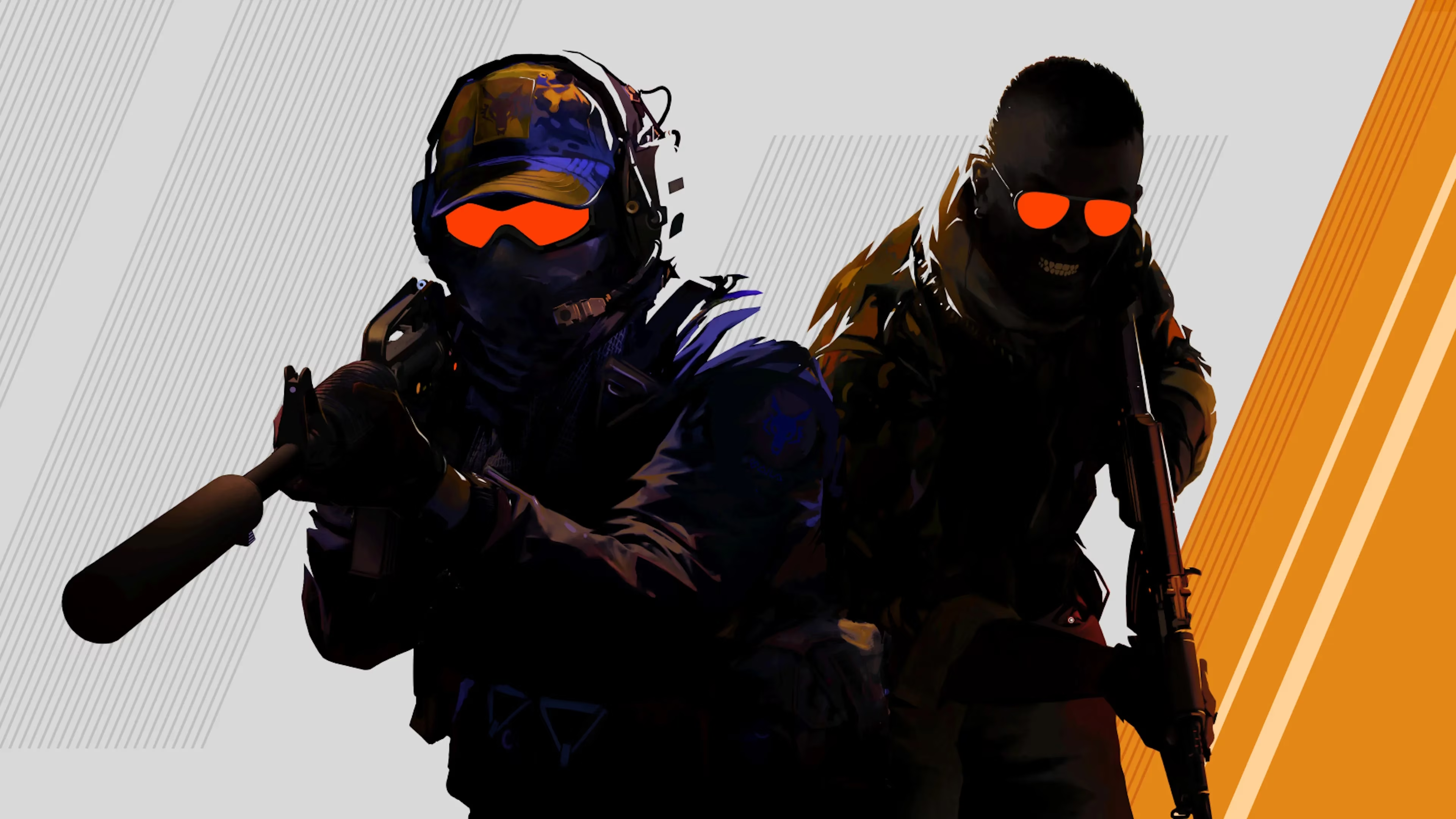
Of course, the entire circus wouldn’t have been half as entertaining without the backdrop of Counter-Strike’s skin economy. While code divers hyperventilated over cs2.exe, ordinary players were busy discovering that Valve’s massive Steam Marketplace overhaul had actually sold their ancient, dust-covered M4A4 skins for real money. What a time to be alive: engine revolutions on one tab, windfall profits on another. The prospect of a Source 2 port promised to keep those digital weapon values soaring—or crashing spectacularly, depending on how optimistic you felt about hit registration in a new engine.
Back then, the average Counter-Strike player might not have grasped what Source 2 actually meant. In theory, a straight port would play exactly like the Source version, because nobody wanted another Counter-Strike: Source 2.0 fiasco that split the community. The real magic lurked in the long-term implications. A modern engine could unlock better lighting, smoother physics, and development pipelines that didn’t require dark rituals to add a new weapon. More importantly, the cs2.exe tag hinted that Valve might not be treating this as a mere upgrade. The word “sequel” floated around like a well-placed smoke grenade, obscuring everything but spreading delicious confusion.
From a 2026 vantage point, the hysteria of that era feels gloriously quaint. We now know exactly how the story unfolded: the Limited Test went live, the internet melted, and Counter-Strike 2 eventually arrived with a bang that even the most feverish data miners couldn’t have fully predicted. Yet the raw excitement of that March week remains unmatched. Watching a community collectively read tea leaves in SteamDB diffs, turning every binary tweak into a prophecy, was a spectacle of modern gaming culture. Valve, the master puppeteer, simply sat back and let the strings vibrate.
For those who weren’t there, imagine refreshing a page showing a developer branch you didn’t understand, knowing that a single change might signal the rebirth of a competitive shooter that had dominated lives for over a decade. It was the digital equivalent of standing outside a locked warehouse, hearing distant hammering, and convincing yourself that Half-Life 3 was finally being assembled. Spoiler: that last one is still a joke in 2026, but hey, at least we got cs2.exe, and it was glorious.
Now, every time a new leak surfaces or a Valve employee accidentally sets their Steam status to "Playing Banana," players recall that frenzied spring when Source 2 crawled into CS:GO’s dev branch. The moral of the story? If you ever spot Gabe Newell smirking, check SteamDB immediately. He’s probably planting another cs3.exe right this second.
Comments