Valve's revolutionary 2026 Counter-Strike Major format introduces a seismic, year-long points-based qualification system, replacing the old Legends invite structure with a brutal gauntlet of three high-stakes tournaments. This masterplan demands relentless consistency, transforming complacent legends into hungry gladiators vying for the ultimate Fall Major stage.
Holy moly, folks! As a grizzled veteran of the Counter-Strike trenches, I've seen formats come and go, but let me tell you, the whispers I'm hearing about Valve's masterplan for the Majors in 2026 are nothing short of earth-shattering! Gone are the days of simply coasting on a single good performance! We're talking about a seismic shift from the old, cozy "you did well last time, so here's another invite" system to a brutal, year-long gladiatorial arena where every single match, every single round, builds towards the ultimate prize. It's a points-based qualification thunderdome, and only the most consistent, battle-hardened warriors will survive to see the hallowed stage of the Fall Major. The old guard is trembling, and the hungry newcomers are salivating. This isn't just an update; it's a declaration of war on complacency!
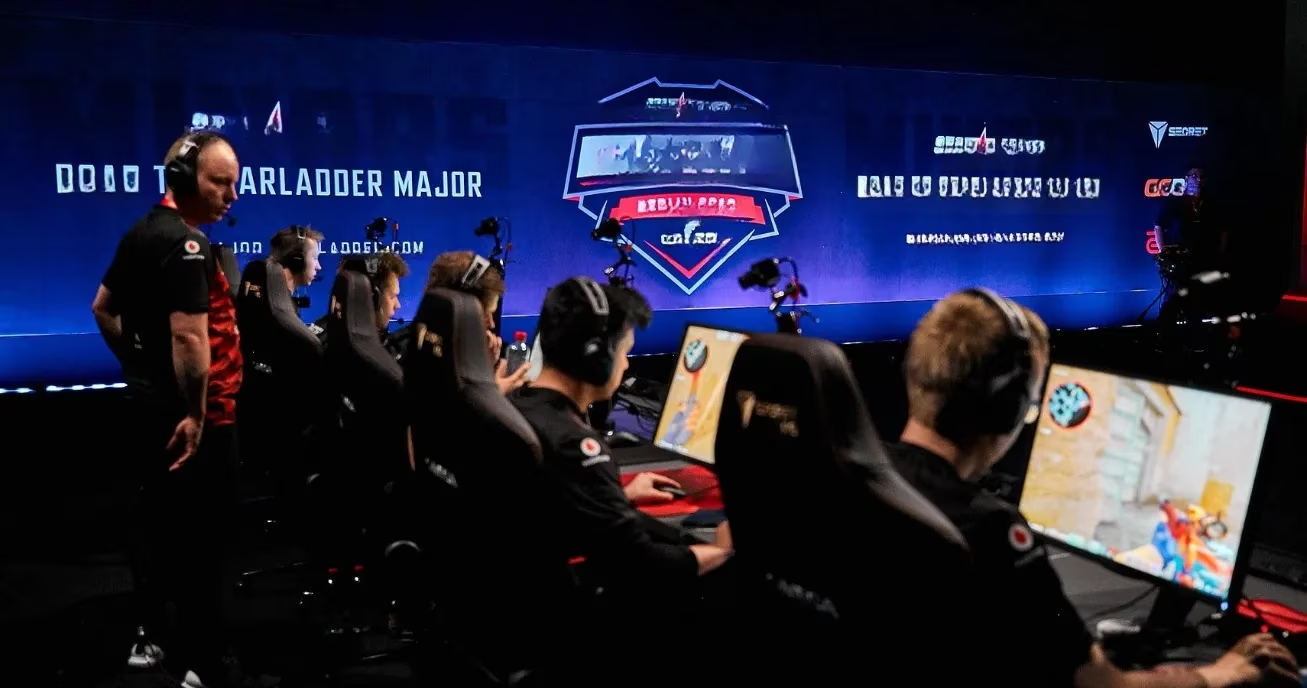
Now, let's dive into the glorious, terrifying details. The cornerstone of this new empire is a series of three sacred, high-stakes tournaments scattered throughout the competitive calendar. Think of them as the proving grounds, the coliseums where legends are forged and dreams are shattered. The first of these holy events? None other than the season-opening Major itself, which in the context of this brave new world, is like the first bloody skirmish in a year-long war. Valve isn't messing around with the criteria for these events either. They've laid down the law with a set of commandments that would make Moses nod in approval. We're talking LAN finals with at least eight titans clashing on stage, a minimum of 24 teams throwing down over the entire event, and a brutal seeding process that strictly uses the official Major Ranking. No favors, no politics—just cold, hard competitive logic.
And the best part? Valve is putting its money where its mouth is, offering to sweeten the pot by matching these tournaments' prize pools up to a cool quarter of a million dollars! That's right, they're not just changing the rules; they're funding the revolution. This transforms these events from mere tournaments into career-defining milestones. The goal is crystal clear: these three battles will determine the 16 gladiators deemed worthy of an invitation to the grand spectacle, the Fall Major. It's a gauntlet of fire, and I am here for every single scorching second of it.
Remember the old way? Ah, the nostalgia. Finish in the top eight at a Major, and you were crowned a "Legend," granting you a golden ticket straight to the next one's group stage. It was a cozy club, a bit too cozy if you ask me. The bottom eight became "Challengers," forced to fight their way back through a qualifier against the best from the regional Minors. This system had its charm, its simplicity, but it also allowed for stagnation. A team could have one magical run and then ride that Legend status for a year while their form plummeted. Not anymore! The new world order aims to anoint the top eight teams in the year-long Major ranking as the true Legends. Teams ranked 9th to 16th will earn the Challenger mantle. Then, these Challengers will face off against the ferocious, hungry lions that clawed their way out of the Minor regions in the dreaded Challengers Stage. It's a beautiful, Darwinian ecosystem designed to ensure only the absolute best, week-in and week-out, make it to the big dance.
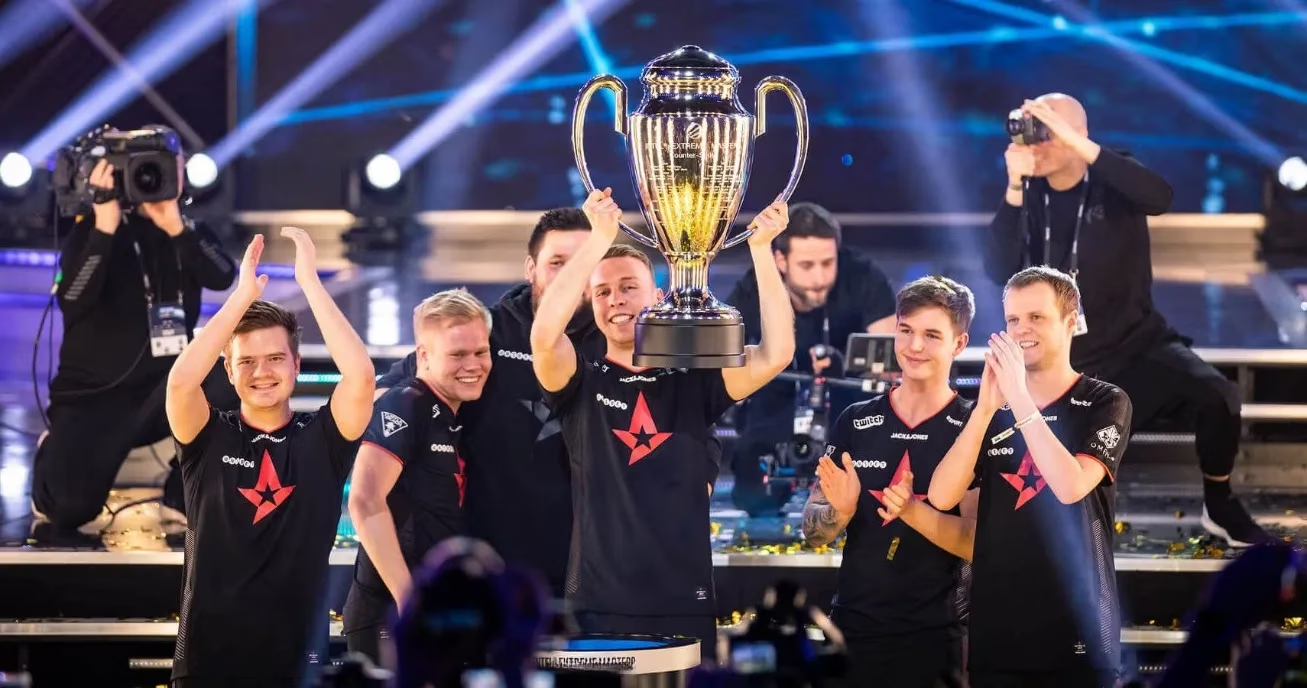
The implications are staggering. Consistency is now king. You can't just peak for one tournament and call it a year. You need to be a monster at the season-opening Major, a beast at the mid-year showdown, and a demon at the late-season classic. Your entire year is a resume for the Fall Major. This puts immense pressure on organizations, coaches, and especially the players. The meta will evolve at a breakneck pace. The schedule becomes a sacred text. And let's talk about that schedule—Valve, in their infinite wisdom (or perhaps madness), has aligned these crucial ranking tournaments to take place between July and September. This, my friends, directly butts heads with the sacred player break traditionally observed from mid-July to mid-August. It's a bold statement: the road to glory has no offseason. The Counter-Strike Professional Players' Association is probably having collective heartburn, and team managers are frantically rewriting their yearly plans. This is the big leagues now; vacation is for the weak!
From my perspective in the trenches, this is the shot in the arm the scene desperately needed. It creates a clear, meritocratic narrative for the entire season. Every match in these designated tournaments carries the weight of Major qualification. The storylines write themselves: the reigning champions fighting to defend their ranking points, the dark horses looking to crash the party at a single event and rocket up the standings, the fallen giants scrambling to reclaim their spot. The hype for these intermediate tournaments will be at Major levels. The viewership will be insane. The stakes? Unimaginably high.
So, what does this mean for us, the players and the fans? It means non-stop, high-octane Counter-Strike with meaning. It means we can argue about the rankings all year long. It means an end to boring, predictable Major invites. It means the ecosystem is more vibrant, more competitive, and more rewarding for the teams that truly dedicate themselves to excellence. The old system was a comfortable couch. This new system is a throne made of swords, and only the strongest can sit upon it. As the open qualifiers for the new era begin, I can feel the electricity in the air. The game has changed forever, and I, for one, couldn't be more excited to load up and fight in this new world. Let the points war begin! 🏆💥
Comments