The VALORANT Operator sniper rifle is gloriously overpowered in 2026, dominating matches and igniting fierce debates among players.
As a seasoned veteran who has seen every meta shift and balance patch since the game's explosive launch, I can tell you with absolute certainty that the Operator sniper rifle remains the single most terrifying and gloriously overpowered piece of hardware in the entire VALORANT arsenal in 2026. It's not just a gun; it's a statement, a philosophy, a one-way ticket to the winner's podium if you have the audacity to wield it. While Riot Games has introduced dozens of new agents, maps, and gadgets over the years, the fundamental, soul-crushing power of the 'OP' has become a sacred, untouchable pillar of the game's identity. To master it is to transcend the rank-and-file player and ascend to a level of pure, unadulterated dominance.
The Unholy Statistics of a God-Slayer 🔥
Let's break down why this weapon inspires both worship and pure, unbridled hatred. The numbers haven't just stood the test of time; they've been etched into the very fabric of the game.
-
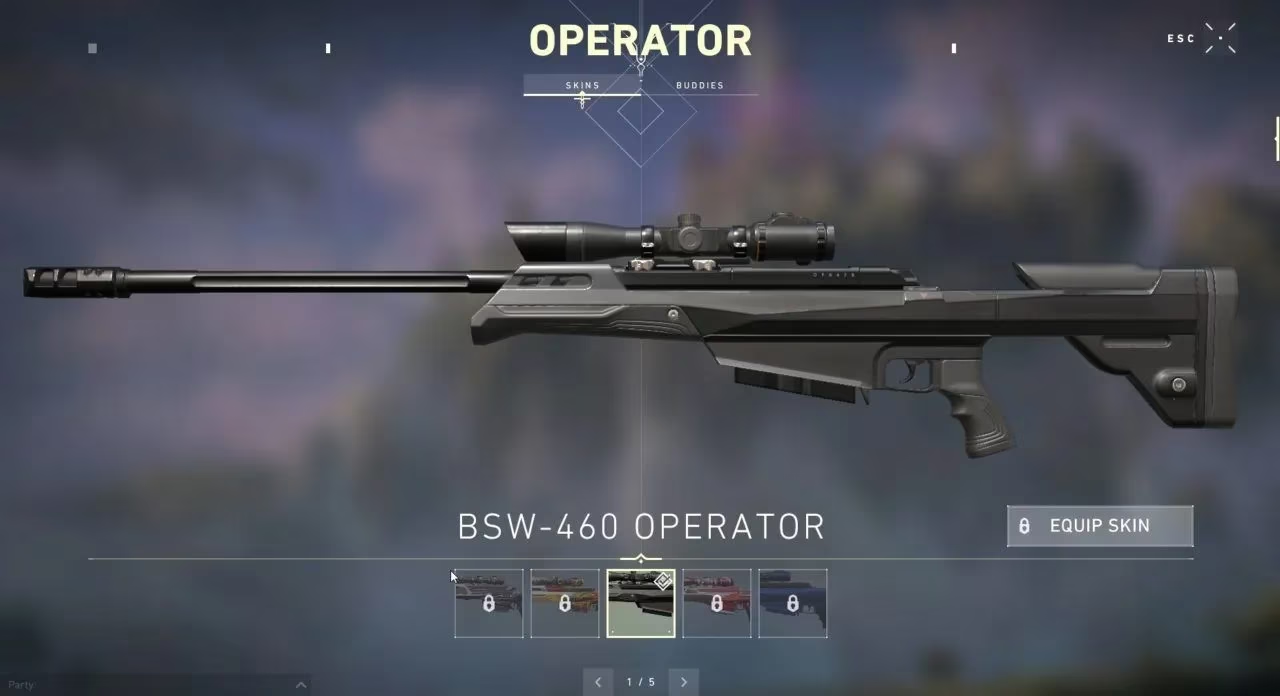
Cost: A staggering 4,500 credits. This isn't a purchase; it's a monumental investment that dictates your entire team's economy for the round.
-
Damage: At 50 meters, it delivers a catastrophic 150 damage to the body, ensuring a one-shot kill to anyone not hiding behind heavy armor. A headshot, at 255 damage, is so gratuitously overkill it might as well delete the enemy's character model from the server.
-
Specs: It comes with a variable 2.5x or 5x zoom, turning distant specks into clear, pixel-perfect targets. Its fire rate of 0.75 rounds per second demands precision, but when each round is a potential game-ender, who needs speed?
The Eternal Debate: Is It Truly Overpowered? 🤔
This question has sparked more arguments than any agent nerf or map rework. Detractors, often found clutching their Vandals and Phantoms in silver and gold ranks, scream that it's a crutch for skill-less campers. They claim a single defender holding a long angle with an Operator can single-handedly shut down an entire site execute. And you know what? They're not entirely wrong! The psychological warfare it wages is half its power. The mere sound of its deep, resonant crack is enough to make an entire attacking team freeze in their tracks, scrambling for smokes and recon. But this is where the naïve perspective ends and true understanding begins.
The Operator has monumental, intentional weaknesses that separate the wheat from the chaff:
| Strength | Counterbalance |
|---|---|
| One-shot kill potential | Abysmal reload speed & tiny 5-round magazine |
| Long-range dominance | Extremely vulnerable in close-quarters combat |
| High damage output | Prohibitively expensive, limiting its use |
Trying to use this behemoth in a tight corridor against a rushing Raze with a Spectre is a recipe for a swift and humiliating respawn. It's a weapon of patience, positioning, and supreme confidence, not panic spray-and-pray.
The Ghost of Counter-Strike: Operator vs. The Legendary AWP 👻
Every discussion about the OP inevitably summons the specter of its spiritual predecessor: the AWP from Counter-Strike. For decades, the AWP was the gold standard for high-risk, high-reward sniping. It demanded immense skill, map knowledge, and economic management. So why does the Operator, its direct descendant, face so much more vitriol? The old argument was that CS:GO gave every player access to basic smokes and flashes to counter it, while in early VALORANT, utility was agent-specific.
But in 2026, that argument is deader than a player peeking mid on Icebox without a dart. The modern VALORANT agent roster is a symphony of counter-sniper utility! We have:
-
Skye's Guiding Light and Trailblazer for intel and flush.
-
KAY/O's NULL/cmd to suppress abilities and that pesky zoom.
-
Fade's Prowler to hunt down campers.
-
A plethora of smokescreens from Omen, Brimstone, Astra, and Viper that can completely blind a sightline.
-
Sova's recon bolt and drone to reveal positions.
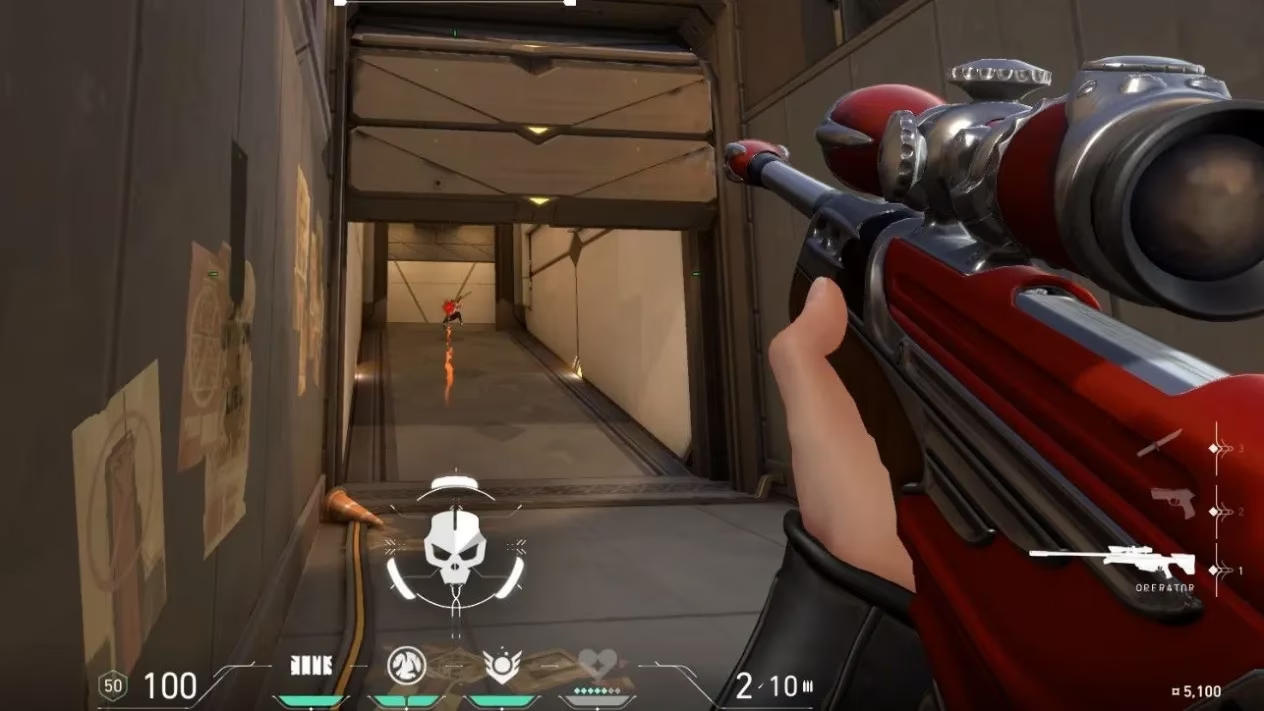
The tools are there, in abundance. The difference isn't in the game's design—it's in the player's mindset.
The Divine Wisdom of the Developers: "It's a Feature, Not a Bug!" 🗣️
I remember watching the legendary lead character designer Ryan Morello's Twitch Q&A years ago, and his words ring truer today than ever before. He stated, with the calm certainty of a developer who had created a masterpiece: "We don't think the Operator is overpowered." He went on to explain the core, beautiful truth: "You walk around the corner, and an OP is standing on the corner, it shoots you, and you die? That's by design, we will not be fixing that."
This wasn't arrogance; it was clarity. The Operator is the ultimate punishment for poor gameplay. It's the game's way of saying, "Your lack of teamwork, communication, and tactical sense has consequences." Morello pinpointed the real issue: the problem manifests in "mid-Elos," not at the professional or expert levels. At the pinnacle of play, coordinated teams treat an enemy Operator not as an unstoppable force, but as a puzzle to be solved.
The Real Culprit: It's You, Not the Gun! 🎯
Let's be brutally honest. The reason so many players rage against the OP is because they are playing a disorganized, chaotic version of VALORANT. They queue with randoms, don't use comms, pick duelists with no thought for team synergy, and then wonder why a coordinated defender with a sniper rifle mows them down. They are playing a deathmatch inside a tactical shooter.
A skilled, communicative team in 2026 has a vast toolkit to dismantle an Operator user:
-
Intel Gathering: Use drones, dogs, and recon darts to find them before peeking.
-
Utility Combos: Pop-flash with Skye or KAY/O while a teammate swings.
-
Area Denial: Force them out of their cozy angle with Raze's grenades or Killjoy's nanoswarm.
-
Tactical Repositioning: Simply avoid their sightline and attack from another, unexpected angle. Map control is key!
The Operator excels against predictable, linear play. It feasts on disorder. The game, in its brilliant design, forces you to evolve. You must learn to use all the futuristic tools at your agents' disposal—remote airstrikes, neural theft, hallucination walls—to outthink, not just outshoot, your opponent.
Conclusion: Embracing the Power
In 2026, the Operator is more than balanced; it's a necessary evil, a glorious monument to skill and tactics. It is the final exam for any team that claims to understand VALORANT. Complaining about it is admitting you haven't yet graduated from the school of hard knocks. So, the next time you hear that fateful crack and see your body hit the floor, don't blame the game. Don't blame the gun. Look at your team's composition, your communication, your strategy. The counterplay exists. The power is in your hands. Now go out there, coordinate, and make that overconfident sniper regret their life choices. That's what makes this game, even after all these years, an absolute masterpiece of tactical mayhem. 💥
Comments