Internet Legends: Duct-Taped Gamer explores the iconic duct-taped gamer meme and its roots in LAN party culture, offering a nostalgic, compelling look at gaming history.
I still remember the first time I saw that picture. A guy, suspended from a ceiling by what looked like a hundred strips of silver duct tape, playing a video game. It was 2003, the internet was a different place, and this image exploded. It was hilarious, bizarre, and instantly iconic. It made you ask all the questions: Why? How? Is that even comfortable? Now, over two decades later, that single frame of internet history has its own feature-length documentary, Internet Legends: Duct-Taped Gamer, and as a lifelong gamer, I couldn't be more thrilled to see this piece of our culture preserved and explored.
The story, as we now know from the fantastic 2024 documentary, is rooted in a specific, almost mythical era of gaming. This was the age of LAN parties. Before high-speed broadband made online multiplayer seamless, we physically hauled our bulky CRT monitors and beige computer towers to a friend's basement or a rented hall. It was a pilgrimage. The game that demanded these gatherings more than any other was Counter-Strike. We weren't just playing CS 1.6; we were living it for 48-hour stretches, fueled by pizza and caffeine. The camaraderie, the shouting, the sheer physicality of it—it was a social event as much as a gaming one. The duct-taped gamer meme is the ultimate artifact from that time.
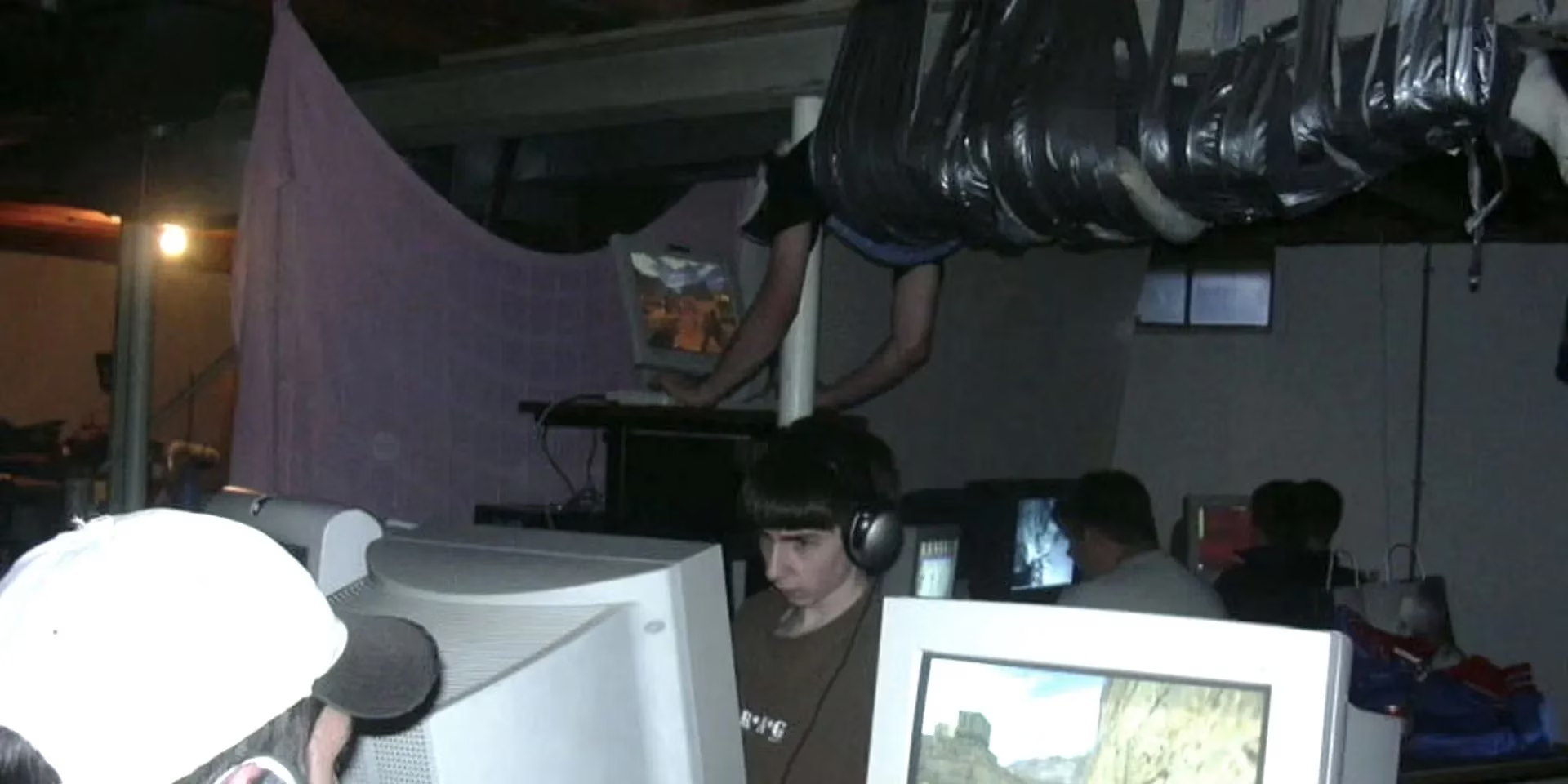
The documentary brilliantly pulls back the curtain. The central figure is Drew Purvis, the man in the tape. He's not just a meme; he's a person with a story. In the film, he recounts the legendary LAN party with a mix of nostalgia and amusement. The catalyst? A combination of youthful exuberance, a dare, and the classic question that has plagued gamers for generations: "What if we could play from the ceiling?" The logistics fell to his friend, the 'taper,' who provides some of the documentary's most technical and funny insights into the structural integrity of their creation. They used over 100 boxes of pizza from Hungry Howie's, not just for sustenance, but apparently as part of the... ambiance. It was a perfect storm of absurdity.
What makes the documentary so compelling in 2026 isn't just the 'how,' but the 'why now?' The film arrived at a time when gaming has undergone a seismic shift. Let's compare the eras:
| 2003 Era (The Meme Era) | 2026 Era (The Documentary Era) |
|---|---|
| Gaming was often a niche, misunderstood hobby. 😅 | Gaming is a mainstream, billion-dollar industry and a viable career. 🏆 |
| Multiplayer meant hauling your PC to a LAN party. 💻🚗 | Multiplayer is global, instantaneous, and often wireless. 🌐📡 |
| Memes spread via forums and email chains. 📧 | Memes are the currency of social media, born and spread in seconds. ⚡ |
| The photo was a mysterious, viral oddity. 🤔 | The story is a documented piece of internet archaeology. 🧭 |
The documentary's trailer itself was a piece of genius, narrated with repurposed audio from Mark Hamill's Luke Skywalker. It gave the whole affair a mythic, heroic sheen, which is exactly what this meme had become—a legend. The film features interviews with everyone from that room, showing their yearbook photos and catching up with their lives now. It answers the questions we all had: Was he safe? (Mostly.) Did he win? (The game is less important than the victory of becoming a legend.)
Watching it now, the nostalgia hits hard. We don't have LAN parties like that anymore. The world has moved to Discord and cloud gaming. But the essence—the community, the shared obsession over a game—remains. Counter-Strike itself is a testament to that, still going strong as a top-tier esport. The duct-taped gamer wasn't just a silly prank; he was the ultimate expression of dedication to the game and the experience. He was willing to be literally stuck to the ceiling for it.
So, what's the legacy in 2026? Internet Legends: Duct-Taped Gamer serves as a crucial time capsule. For older gamers like me, it's a warm, funny reminder of where we came from. For newer gamers, it's an essential history lesson about the wild, analog roots of their digital pastime. It shows that the heart of gaming isn't just the graphics or the mechanics; it's the stories we create together. It proves that sometimes, the most enduring part of a game isn't a headshot or a victory screen, but a friend duct-taped to the ceiling, forever immortalized in the chaotic, wonderful history of the internet. The documentary finally gives that iconic image the context, the voices, and the celebration it always deserved. It’s not just about a meme; it’s about a moment in time that defined a generation of gamers.
Comments