FaZe Clan's Counter-Strike team origins and esports funding reveal the controversial role of skin gambling, spotlighting ethical dilemmas and innovation.
In the high-stakes world of esports, where organizations compete for million-dollar prizes and global fame, the line between entrepreneurial hustle and ethical ambiguity can often blur. This is a story that takes us back to the foundational years of one of gaming's most iconic brands. Would you believe that the initial capital to propel FaZe Clan's competitive Counter-Strike: Global Offensive team came not from traditional investors, but from the profits of a skin gambling website? This revelation, made by FaZe co-owner Ricky 'Banks' Bengston, sheds light on the gritty, often unregulated underbelly that existed alongside the explosive growth of professional gaming.

Banks detailed the creation of the website "CSGO WILD" on a podcast, framing it as a necessary venture to finance the organization's long-term ambitions. His description of the endeavor as a "grey area" is particularly telling. He argued that since the cosmetic skins had no government-assigned monetary value, operating a gambling platform around them existed in a legal loophole. "We came up with this idea, with these kids, for a different way to do it. We branded it the right way," Banks stated, suggesting a narrative of innovation rather than exploitation. But how did this ecosystem even come to exist? The entire model was built upon Valve's in-game economy, where players could spend real money to open cases containing random cosmetic weapon skins, some of which attained values in the thousands of dollars.
The mechanism was simple yet potent: a player would deposit a skin into the website's system, use it to place bets on games of chance, and potentially win more valuable skins. For the site operator, the house always won in the long run, generating a steady revenue stream. This revenue, according to Banks, was funneled directly into FaZe Clan's CS:GO roster, covering salaries, travel, and other operational costs at a time when esports sponsorships were less robust. It presents a fundamental question: does the end goal of building a competitive team justify the means of funding it through a practice that often preyed on younger, impressionable players?
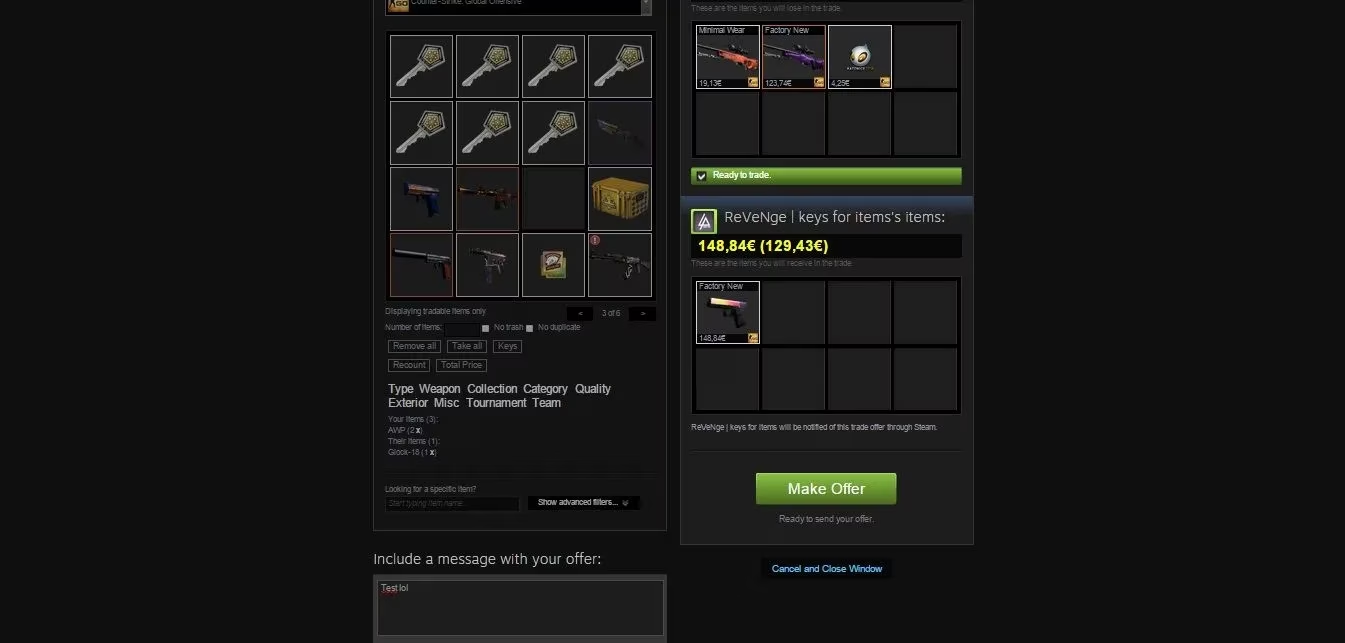
Valve's role in this saga cannot be overlooked. The company created the marketplace and the coveted digital items that fueled this secondary gambling economy. While third-party gambling sites explicitly violated Steam's Terms of Service, Valve profited immensely from the primary sale of keys needed to open the cases. It was a cycle of desire: players bought keys hoping for a rare skin, and those who didn't get lucky often turned to gambling sites to try and win one, or sold their skins to fund more key purchases. Was Valve an innocent platform provider, or a complicit beneficiary of a system it refused to adequately police for years?
The environment surrounding these sites was notoriously risky. Beyond the gambling itself, the community was rife with:
-
Account Hijacking: Hackers targeted users on these unsecured third-party platforms.
-
Fraudulent Transactions: Trades could be scams, with users losing their items with no recourse.
-
Underage Gambling: A significant portion of the CS:GO player base was, and still is, under the legal gambling age, yet faced few barriers to entry on these sites.
In response to the chaos, Valve was eventually forced to act, implementing stricter trade holds and security measures that slowed the entire skin economy to a crawl to combat fraud. This made the quick-flip gambling model more difficult but didn't eradicate it entirely. Banks's claim that CSGO WILD operated legitimately stands in stark contrast to the industry's notorious reputation. Given his and FaZe Clan's subsequent legal entanglements, such as the high-profile lawsuit with former member Turner 'Tfue' Tenney regarding allegedly exploitative contracts, skepticism about his portrayal of events is warranted. In many ways, learning that Banks ran a CS:GO gambling site is one of the least surprising facts about his career in the esports wilderness of the mid-2020s.
Ultimately, this story is a cornerstone chapter in the history of modern esports. It illustrates the raw, unregulated capitalism that characterized the industry's growth spurt. FaZe Clan, now a publicly-traded entity with partnerships across entertainment and consumer goods, has its roots deeply entangled in a controversial practice that many regulators and advocates have fought against. The narrative raises enduring questions about responsibility, legacy, and the true cost of building an empire. As esports continues to mature and seek mainstream legitimacy, will the industry fully reckon with these foundational stories, or will they remain as open secrets in the lore of gaming's ascent?
Comments