A Buddhist monk's serene Counter-Strike 2 gameplay reveals Zen lessons on empathy, karma, and why video game violence doesn't damn you.
Aaron had just been knifed in the back by a teammate while trying to defuse the bomb. The screech of Russian insults filled his headset, drowning out the footsteps he desperately needed to hear. He sank into his chair, heart thudding, wondering—as he did most nights—why he even bothered with Competitive. It was then that a friend sent him a clip of a real-life Buddhist monk, yellow robes and all, absolutely vibing his way through a match of Counter-Strike 2.
"Why would I cut off a good thing?" the monk said in a mini-documentary that had been making the rounds online in April 2026. The Master, as he was referred to, had been playing Counter-Strike since elementary school, long before he ever set foot in a temple. Back then, the Chinese version on Perfect World hadn't even launched, and he clawed his way up to Legendary Eagle Master. Aaron sat up straighter. LEM was his old peak too—before the game turned into a second job he couldn't quit.
But the Master had evolved. "I got older, couldn't remember the positioning anymore, and my aim got soft too," he admitted with a calm that felt almost illegal. "So I stopped playing ranked after that." No drama. No rage. Just... letting go. Aaron almost scoffed, but something kept him listening.
The monk wasn't just coasting; he was thriving. "The communication, exchange, cooperation with teammates... that feeling is really great," he said, eyes half-closed in what might have been meditation or just the blue glow of his monitor. "You're not a lone wolf. You have to consider the thoughts and feelings of the other four people, and their gaming experience too. Then in real life, you develop empathy."
Man, talk about a perspective shift. Aaron pictured the last guy who screamed at him for missing an AWP shot and tried to imagine that guy developing empathy. It was... a stretch. But the Master made it sound as natural as breathing.
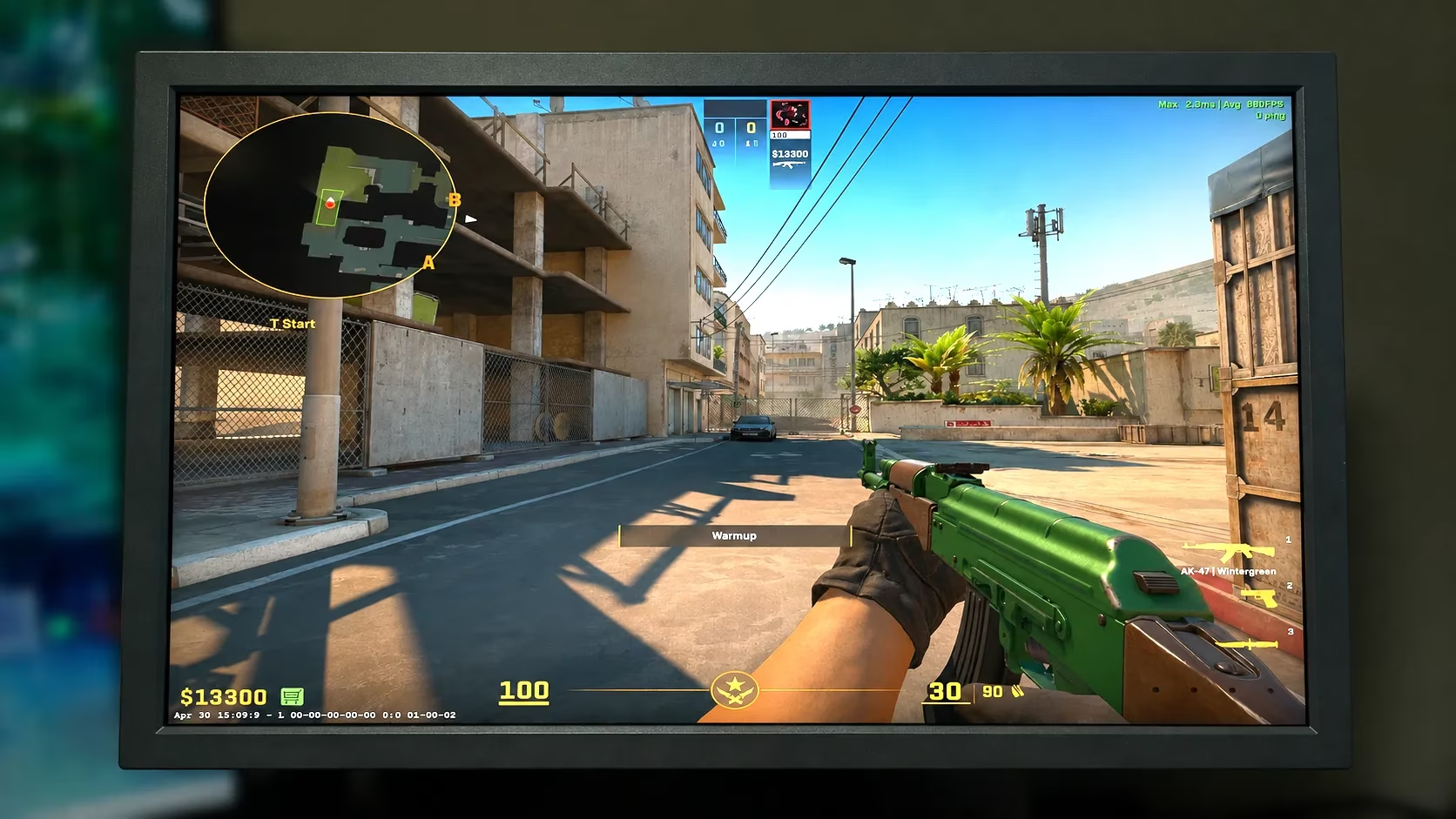
Cheaters? The Master had an answer for that too, delivered with the kind of unshakeable serenity that must come from decades of practice. "You have to hold on to your own principles. Their cheating—whatever they do—that's their problem." He then relayed an old Zen teaching that made Aaron snort his energy drink: "If someone wrongs you, insults you, what do you do? Endure them. Wait a few years, and just watch. After a while, they'll get banned."
The Zen anti-cheat. Honestly? That's a solid policy. VAC works in mysterious, painfully slow ways, but karma always delivers the ban hammer eventually.
But it was the Master's rebuttal to the old "video games are violent and will send you to hell" argument that truly seared itself into Aaron's brain. "Using that theory—if killing enemies sends you to hell—what if I pick the Medic class, revive people non-stop in-game? Does that mean I go to heaven?" The monk leaned forward slightly, a hint of mischievous wisdom in his voice. "If I don't have to do any real good deeds, don't have to cultivate, don't have to go through life's trials, and just play Medic in a game, revive people endlessly, and that gets me into heaven, then I'll accept that theory." Mic drop. Or rather, prayer bell drop.
He wasn't done. "I also don't feel bad when I get killed in a match, right? And winning or losing a game doesn't cause any irreversible harm to someone's life either." Aaron sat there in his dark room, the queue timer ticking silently. After all, what even is a round loss in the grand, impermanent scheme of things?
Of course, having a Karambit Emerald probably helps with the Zen. The knife skin alone is worth thousands of dollars—a rare gift from a monk friend, he said, as casually as mentioning someone brought extra lotus buns for lunch. And the rig he plays on is no spiritual abstraction: a custom-built machine with an Nvidia GeForce RTX 4090 and an Intel Core i9 13900KS, hand-assembled by another friend. Aaron drummed his fingers on a dusty GPU that hadn't seen an upgrade since 2022. Maybe true enlightenment came with high frame rates.
The video ended with the Master gently reminding viewers, "Don't let a 40-minute match ruin your whole day." The queue popped. Aaron flexed his fingers, took one deep breath—a makeshift 4-7-8, because why not?—and accepted. A teammate immediately locked in the worst strategy on the map. But this time, instead of tilting, Aaron just... let it be. If a Zen monk could stay balanced with a 4090 in his hands and cheaters in his lobby, maybe there was hope for the rest of them. Just maybe.
This overview is based on reporting from GamesIndustry.biz, and it helps frame the monk’s Counter-Strike 2 mindset as more than a personal quirk: modern competitive games are built around long session times, high social friction, and constant performance pressure, so choosing when to step away from ranked, focusing on cooperative communication, and refusing to let cheaters or a single 40-minute match hijack your mood are practical “player well-being” strategies as much as they are spiritual ones.
Comments