Riot Games' 2026 trademark lawsuit against the Riot Squad esports organization highlights a fierce David vs. Goliath legal battle over brand identity. This high-stakes clash in competitive gaming centers on the alleged infringement of the powerful 'Riot' name and philosophy.
In the world of competitive gaming, where brands and identities are everything, a classic David versus Goliath scenario is unfolding in 2026. Riot Games, the powerhouse developer behind the global phenomenon League of Legends, has taken legal action against the much smaller, recently formed esports organization known as Riot Squad. The lawsuit, filed in a California court, alleges that Riot Squad is knowingly infringing on Riot Games' established trademarks, creating confusion in the esports marketplace by making people think the two entities are somehow connected. This legal tussle highlights the high-stakes nature of branding in an industry where a name can be worth millions.
The Core of the Conflict: "Riot" in the Crosshairs
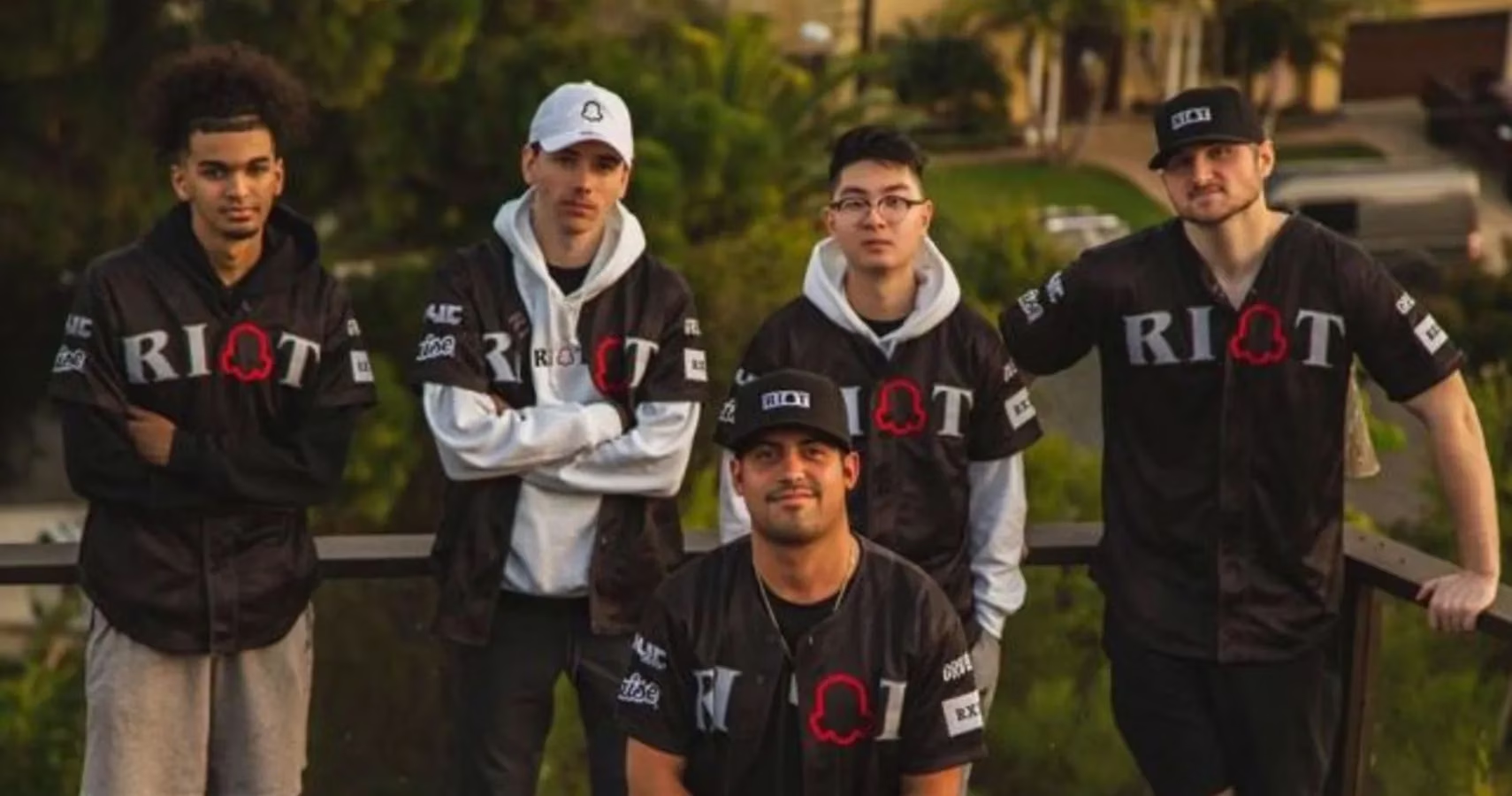
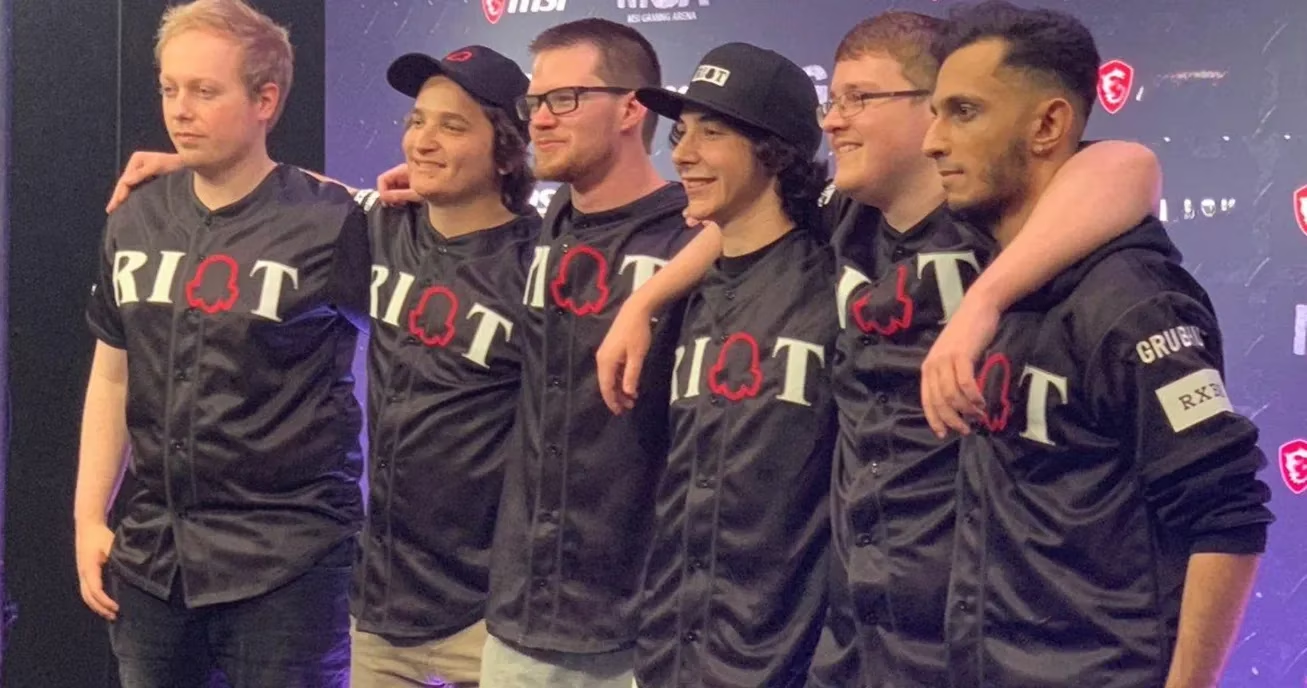
At the heart of this dispute is a single, powerful word: Riot. Riot Games holds registered trademarks for both "Riot" and "Riot Games" in connection with video games and esports. The lawsuit points out that Riot Squad's branding leans heavily into this contested territory. Their team jerseys, for instance, prominently feature the word "Riot." The legal filing also notes that the organization sometimes shortens its name to just "Riot" in communications, further blurring the lines.
But wait, there's more! The complaint digs deeper, alleging similarities that go beyond the name. Riot Squad's stated motto is "by gamers, for gamers." Sound familiar? Riot Games' own well-known philosophy is "by players, for players." From Riot Games' perspective, this isn't just a coincidence; it's a pattern of behavior designed to ride on the coattails of their hard-earned reputation. Talk about adding insult to injury!
What Riot Games Wants: A Complete Shutdown
Riot Games isn't messing around with this lawsuit. They've asked the court for some pretty severe remedies, including:
-
A permanent injunction to forbid Riot Squad from using the word "Riot" in its name, branding, and marketing.
-
An award of monetary damages for the alleged trademark infringement.
-
A court order mandating the destruction of all Riot Squad merchandise—think jerseys, hats, posters—that features the infringing "Riot" branding.
It's a full-court press designed not just to win a case, but to completely erase the "Riot" name from this competitor's identity. For a young organization, this could be a death sentence.
Jurisdiction Jujitsu: Why California?
Here's an interesting twist: Riot Squad is based in Chicago, but Riot Games filed the lawsuit in California, where their headquarters are located. You might be thinking, "Hold up, can they do that?" Well, according to the legal filing, they absolutely can. The suit argues that Riot Squad actively "transacts business" in California. They point to specific instances:
-
Participation in esports events like the National PUBG League at the OGN Super Arena in Manhattan Beach.
-
Promotional activities and presence at major industry conventions like TwitchCon in San Diego.
-
Forming partnerships and contracts with other California-based entities.
By establishing that Riot Squad operates in the state, Riot Games gets to fight this battle on their home turf, which is a classic legal strategy. Smart move, but a tough break for the Chicago-based squad.
The Underdog's Uphill Battle
Let's get real about the scale here. Riot Games is a titan, founded in 2006 and later acquired by the Chinese conglomerate Tencent. They basically defined the modern esports landscape with League of Legends. Riot Squad, on the other hand, is a newborn by comparison, founded just a few years ago in March. Ironically, they don't even field a League of Legends team! Their competitive focus is on other popular titles:
-
Counter-Strike: Global Offensive (CS:GO)
-
Fortnite
-
Rainbow Six: Siege
-
Apex Legends
-
PUBG
Despite securing some notable sponsors like Grubhub and Four Loko, Riot Squad's fanbase remains modest. With around 8,000 Twitter followers and 5,500 on Twitch, they're operating in a different league—pun intended. The lawsuit acknowledges that they likely can't "cough up" massive monetary damages. The real threat is the potential court order forcing a complete rebrand. For a small org, rebuilding brand identity from scratch is a monumental and often fatal task.
The Bigger Picture: Trademark Wars in Esports
This case is a microcosm of a larger trend. As esports matures into a multi-billion dollar industry, protecting intellectual property has become paramount. Established companies like Riot Games are fiercely protective of their brands, viewing any potential infringement as a threat to their market position and fan loyalty. For new organizations, navigating this legal minefield is part of the game. Choosing a name that's unique, memorable, and legally clear is more important than ever.
So, what's next for Riot Squad? If the lawsuit proceeds and doesn't go their way, the most likely outcome is a forced name change. They'll have to go back to the drawing board, potentially losing all the brand equity they've built in a short time. It's a harsh reminder that in the fast-paced world of esports, sometimes the biggest battles aren't played on the virtual battlefield, but in the courtroom. Only time will tell if this squad can weather this particular storm. 🤔
Comments