Brazilian Counter-Strike and MIBR's roster moves, especially kNgV-'s potential signing, dramatically reshaped the esports scene in 2019.
It has been over seven years since those initial reports surfaced, and looking back from our vantage point in 2026, the landscape of Brazilian Counter-Strike has been irrevocably shaped by pivotal roster moves. I can still vividly recall the buzz in mid-2019 when rumors first linked Vito \"kNgV-\" Giuseppe to the iconic Made in Brazil organization. According to a report from Jarek \"DeKay\" Lewis at the time, MIBR was actively seeking to sign the aggressive AWPer to fill the void left by the legendary Marcelo \"coldzera\" David, who had stepped down following ESL One Cologne. This potential acquisition was seen as a desperate, yet hopeful, gambit for a team struggling to recapture its former glory.
The immediate complication, which dominated discussions back then, was the roster lock for the upcoming StarLadder Berlin Major. MIBR would be forced to compete at the tournament with their coach, Wilton \"zews\" Prado, standing in once more. This wasn't an unfamiliar position for the squad; they had already fielded zews at events like BLAST Pro Series Los Angeles and IEM Chicago. The image of their coach, rifle in hand, became a symbol of a team in transition. 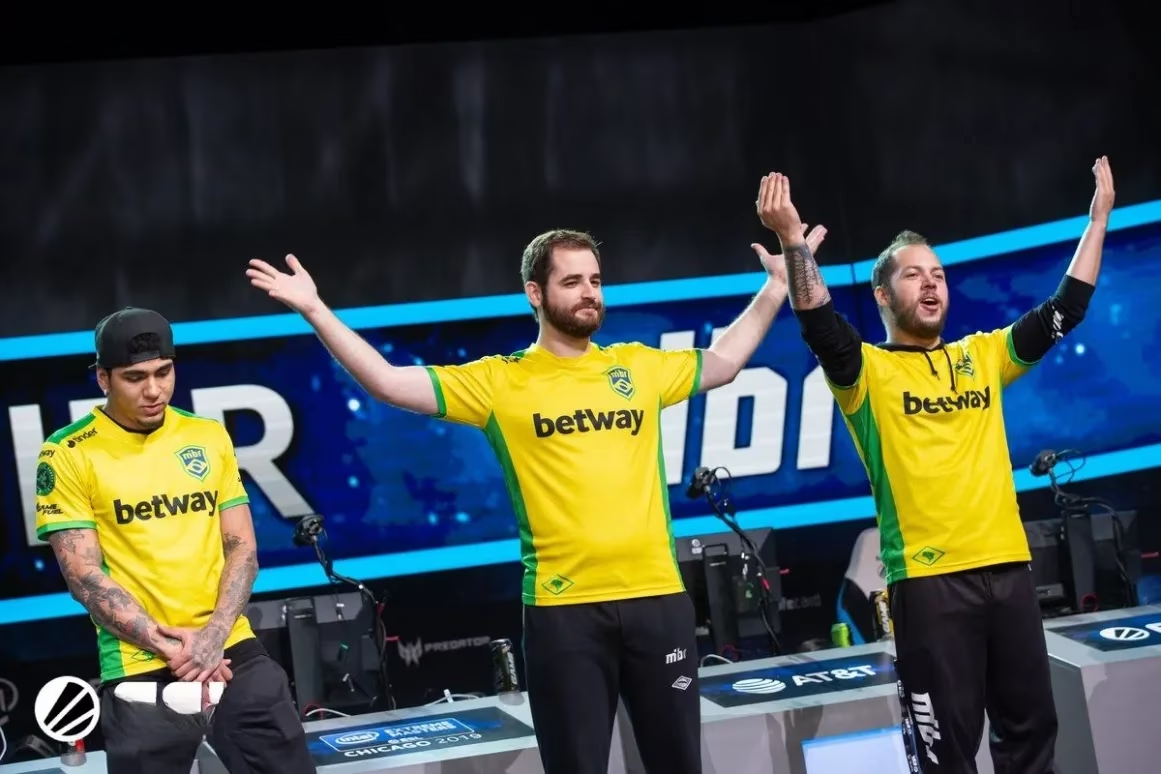
For kNgV-, a move to MIBR represented a chance at redemption and reunion. His career had already been a rollercoaster. He famously led the Immortals squad to the grand final of the PGL Krakow Major, a Cinderella run that captured hearts. However, that era was also marred by multiple controversies which ultimately led to the entire roster's release. Joining MIBR would mean linking up again with his former Immortals teammate, Lucas \"LUCAS1\" Teles. Interestingly, this wasn't the first time MIBR had shown interest. Past attempts had consistently faltered, primarily due to Giuseppe's well-documented struggles with securing the necessary visas to compete internationally—a hurdle that seemed perpetually to delay his ascension to the very top tier of teams.
Despite the visa saga, kNgV- remained an active competitor. At the time of the rumors, he was playing under the INTZ banner, fighting through the Minor circuit for a shot at the Berlin Major. His raw, explosive talent was never in question. He was the archetypal star player, a source of relentless firepower capable of single-handedly swinging rounds. For an MIBR lineup that had spent years searching for stability—cycling through fifth players in 2017 and enduring a turbulent mixed Brazilian-American experiment for most of 2018—adding such a dynamic element was a clear statement of intent.
The context of coldzera's departure cannot be overstated. He wasn't just a player; he was a cornerstone, a two-time HLTV MVP whose departure left a strategic and psychological chasm. The team's recent performances offered a glimmer of hope, however. While BLAST Los Angeles was forgettable, their run to the semi-finals at IEM Chicago had fans reminiscing. Veterans Gabriel \"FalleN\" Toledo and Fernando \"fer\" Alvarenga turned back the clock, nearly pulling off a miraculous comeback on Train against Envy with vintage performances. Adding kNgV- to that core promised a terrifyingly potent offensive trio. 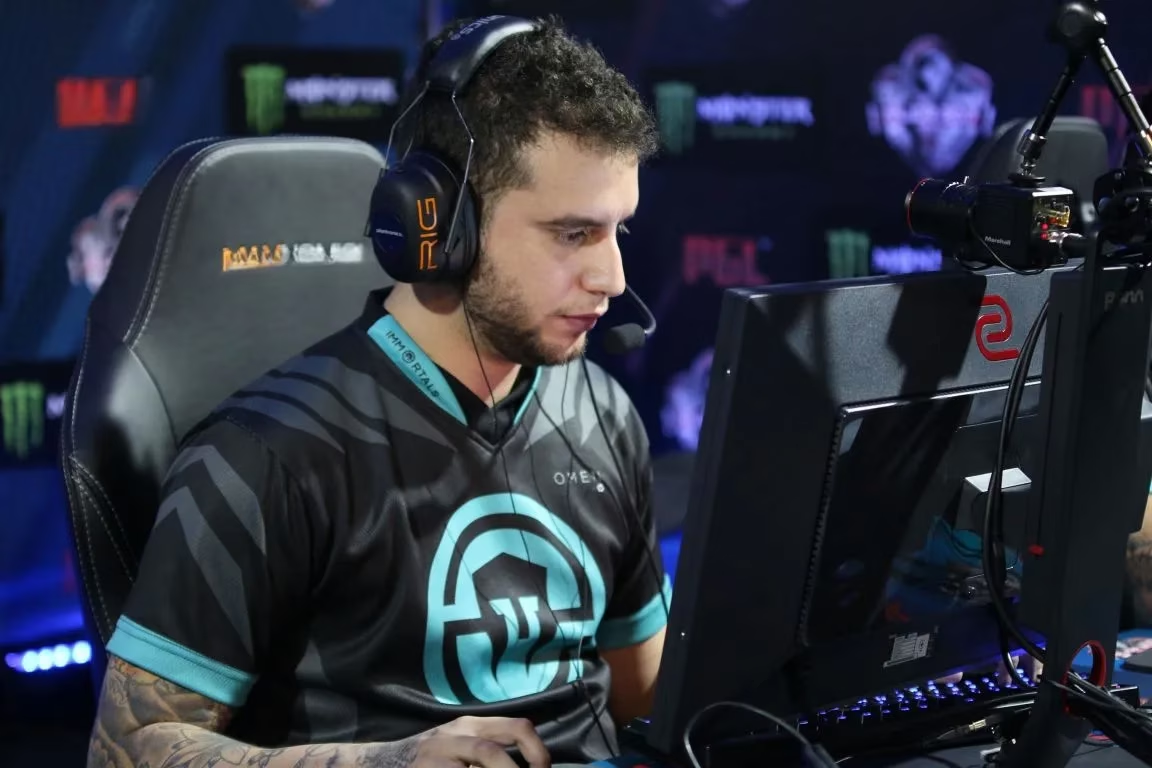
Looking back with the benefit of hindsight, the period between the rumor and the expected signing after the Berlin Major was fraught with anticipation. The community was split: Could kNgV-'s undeniable skill finally be harnessed consistently within a structured system like MIBR? Or would the past issues resurface? The potential move symbolized more than just a player transfer; it was a bet on raw, unfiltered talent to reignite a sleeping giant. The expected timeline was clear: compete at the Major with a stand-in, then integrate the new star for the next chapter. In 2026, we now know how this pivotal moment set the stage for the ensuing years of competition, where such roster decisions continue to define legacies and reshape regional hierarchies.
Comments