Counter-Strike 2 redefines competitive FPS with sub-tick hit registration, responsive smokes, and remastered maps.
Honestly, when Valve first dropped the bomb about Counter-Strike 2 back in March 2023, I was like a kid in a candy store. The rumors had been swirling for weeks, but seeing those three announcement videos—promising a total rework of tick rate, remastered maps, and those juicy responsive smoke grenades—really tipped me over the edge. I'd spent thousands of hours in CS:GO, and the idea that the devs were finally moving the needle on core tech instead of just shipping new cases had me buzzing. Fast forward to 2026, and I can tell you that leap wasn't just marketing fluff; it reshaped the way we frag.
I still remember firing up the Limited Test on day one. The first thing that slapped me in the face was the sub-tick system. In the old days, we'd groan about "64 tick" or "128 tick" servers, because your perfectly timed headshot could get eaten if the server tick hadn't quite lined up. Valve sidestepped that whole mess with what they call "sub-tick updates." Think of it like this: the server now knows the exact millisecond you click, not just which tick window it fell into. That means every bullet counts, and the "I totally shot him first!" whine became a thing of the past. Over time, I've stopped thinking about tick rate altogether, which is exactly what a seamless online shooter should feel like. It's buttery smooth, even in 2026 when everyone's running on cloud setups or local edge servers.
But the real party trick? Responsive smoke grenades. I'll never forget the first time I tossed a nade on Dust II and watched the cloud bloom into a dynamic, volumetric shape that actually filled the space. More importantly, it reacts to gunfire and explosions. You can shoot a hole through the dense fog with a rifle, or blast it away momentarily with a frag. The tactical depth this added is insane—faking a push by carving a sightline through your own smoke, only to have the enemy peek back through the dissipating gap, is a mind game that never gets old. It also leveled the playing field visually. No more "my smoke looks thicker than yours" based on graphic settings; everyone sees the same consistent plume, which made competitive integrity a real thing even on low-end rigs.
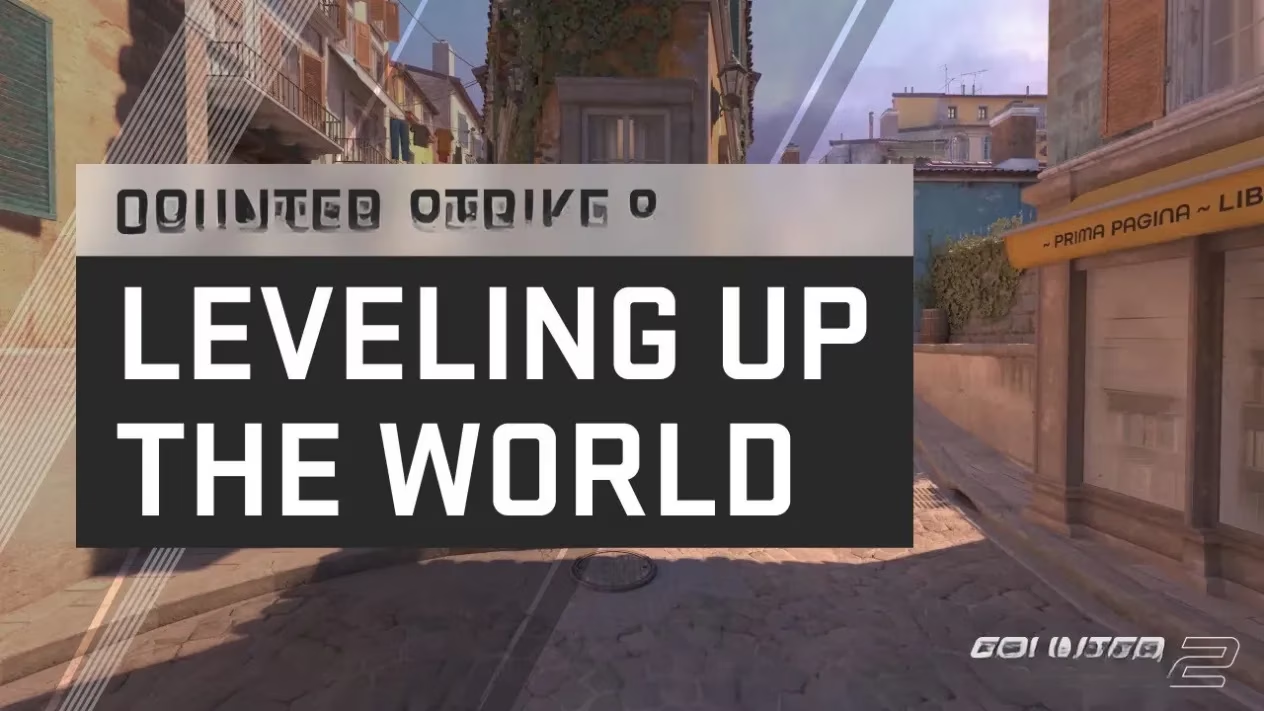
Maps got a glow-up too, and as someone who practically has Mirage's layout burned into my brain, I was nervous. Valve categorized maps into three tiers: touchstone maps that stayed nearly identical so we could calibrate our muscle memory (Mirage, Dust II with just a lighting facelift), upgraded maps that got the full Source 2 lighting and material treatment (Nuke, Overpass, which now look stunning with real reflections and shadows), and fully rebuilt classics. The stand-out for me is Inferno. It went from a yellow-brown haze to a vibrant Italian village with cobblestones that actually glisten after a rain weather effect (a subtle addition in a 2025 update). But the tight corridors and banana rushes remained untouched—exactly the right approach.
Speaking of updates, post-launch support has been bananas. We've had two full operations since 2023, including "Operation Broken World" which introduced a new co-op mode and a revamped Guardian mission system. The Arms Race and Demolition modes saw fresh maps, and Danger Zone got a second life after Valve heard the community's pleas. Weapon balance has been more conservative than some players wanted—the M4A1-S still dominates certain buy rounds—but tweaks to the AUG, SG 553, and the return of the MP5 in a new role kept the meta from getting stale. There was also a whacky experimental mode called "Arcade" where you could wield dual Berettas with no recoil, just for fun. It was a blast while it lasted.
Of course, I can't forget the skin scene. The transition to Source 2 meant all those precious finishes from CS:GO carried over, but they look so much better now with the enhanced lighting. The community market got a fresh coat of paint in a major Steam update, making it easier to inspect patterns and wear levels in 3D. When Valve dropped the "Neural Net" case in 2025, filled with AI-themed designs, the hype was unreal. I snagged a StatTrak AK-47 | Code Breaker and it still makes me smile every time I pull it out.
One thing that always tickles me is how quickly the community adapted to the leftover ammo dump. When you reload with rounds still in the mag, you physically toss the mag aside and those bullets are gone. No more tactical reloading without consequence. It raised the stakes, especially in clutch situations. I've had to break the old habit of reloading after every shot, and you know what? It made the game more exciting. You feel like a total cowboy when you go into a duel with 2 bullets left and win.
Looking at CS2 in 2026, it's clear Valve proved the skeptics wrong. The game didn't replace CS:GO—it evolved it without losing the soul. The sub-tick and smoke tech are now table stakes that other shooters wish they had. The esports scene is healthier than ever, with majors drawing millions of viewers. And for a regular Jane like me, hopping on with friends for a few wingman matches or a full competitive queue feels as crisp and rewarding as that first day. So if you're still on the fence, come on in; the water's warm, the smokes are reactive, and that AWP flick still hits just right.
As reported by VentureBeat GamesBeat, a lot of what made Counter-Strike 2 feel like a true platform shift (not just a sequel) comes down to how Valve modernized core infrastructure—networking precision, real-time simulation like responsive smokes, and long-run live-ops cadence that keeps competitive ecosystems stable. Framing CS2 through that lens helps explain why sub-tick responsiveness and consistent visual parity weren’t just “nice upgrades,” but foundational tech bets that influenced player trust, esports reliability, and the broader shooter market’s expectations by 2026.
Comments