CSGOEmpire protesters invaded the PGL Major Copenhagen G2 vs MOUZ stage over a CSGORoll gambling dispute.
I was sitting in front of my screen on the night of March 29, 2024, watching G2 and MOUZ grind through the second map of their PGL Major Copenhagen series, when the broadcast stopped making sense. One second the analyst desk was filling the halftime break; the next, a lone figure in dark clothing was strolling across the main stage toward the trophy. I honestly thought it was a bit — some kind of production gag, maybe a hype package bleeding into the live feed. It was not. That was the night a Counter-Strike Major stage got invaded for the very first time, and I have not been able to stop thinking about it since.
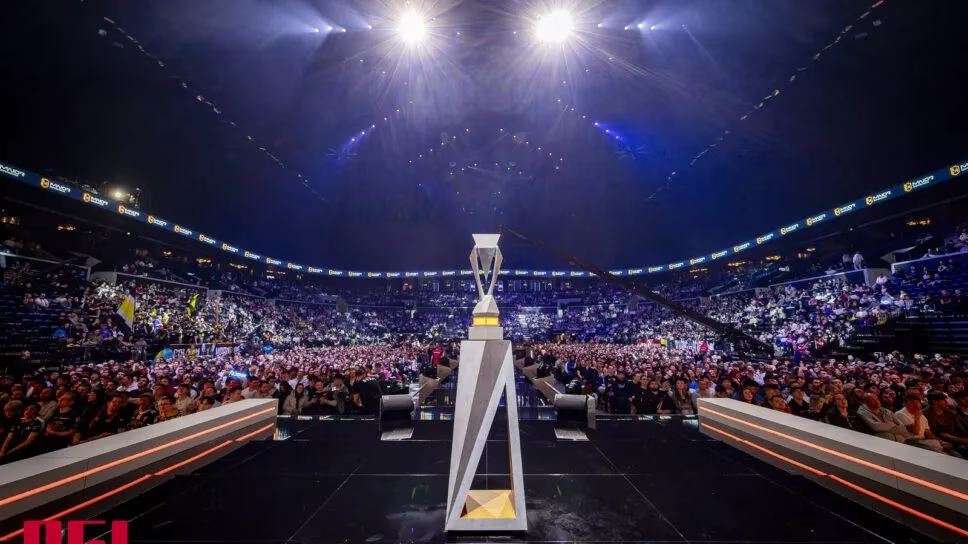
The Moment the Arena Turned Into a Crime Scene
Security moved fast. The first person was immobilized almost immediately, but that was only the opening act. Several more protesters followed the exact same path, spilling onto the stage in a coordinated push. On the broadcast, you could hear the crowd shift from confusion to a low, uneasy rumble. The trophy — the thing every single one of those players had spent months grinding toward — appeared to be broken in the chaos. Cameras kept cutting, casters kept talking over the noise, and nobody on the desk seemed to know what to say.
What struck me most was how ordinary the intrusion looked. There was no dramatic rush, no shouting into the mic. Just people walking where people are not supposed to walk, in a space that is supposed to be untouchable. For a few minutes, the most prestigious stage in Counter-Strike belonged to someone else entirely. 🚨
A Grudge Fueled by Gambling Money
It did not take long for the pieces to connect. People on-site and online quickly linked the protest to an ongoing dispute between the gambling site CSGOEmpire and a competing site, CSGORoll — a sponsor of G2. Pamphlets recovered inside the arena spelled out the accusation in blunt terms: that G2 had been paid millions to knowingly advertise a fraudulent, unlicensed and illegal casino, and that the organisation had gone so far as to use a minor to promote it to a mass audience of young people.
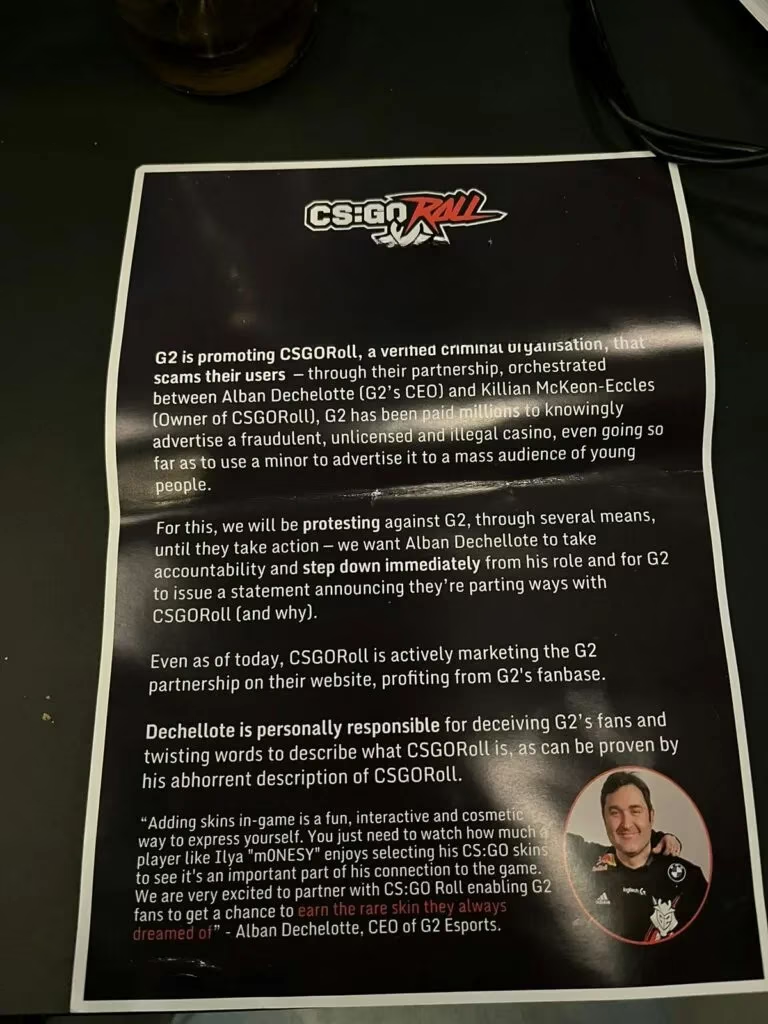
The pamphlet also made it clear the demonstration was not a one-off stunt. It stated that G2 would be protested "through several means" — a line that reads very differently when you are watching bodies on a Major stage.
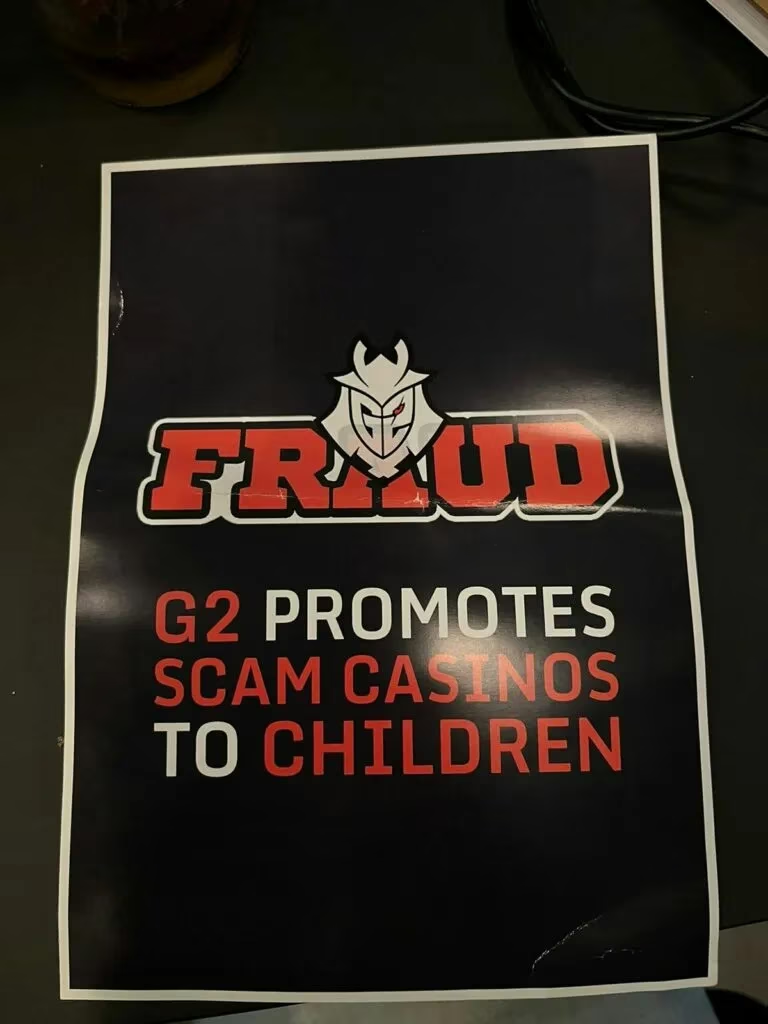
The Accusations Went Public Immediately
Monarch, one of the founders of CSEmpire, did not stay quiet. He published serious accusations through the site's official channels, invited journalists, reporters and content creators to dig into the subject, and explicitly called for the dismissal of G2 CEO Alban Dechellote. Whether you find the whole thing cynical, justified, or somewhere in between, the message was unmistakable: this was an attack aimed squarely at a team's sponsorship choices, executed on the biggest possible canvas.
| Element | What Happened |
|---|---|
| 📅 Date | March 29, 2024 |
| 🎮 Match | G2 vs MOUZ, second map |
| ⏱️ Timing | Halftime break |
| 🏆 Damage | Trophy appeared broken |
| 🚔 Outcome | Multiple people expelled from the venue |
| 🥇 Precedent | First-ever invasion of a Counter-Strike Major stage |
Even s1mple Weighed In
Oleksandr "s1mple" Kostyliev, never one to let a moment pass quietly, posted that he knew exactly who was behind the invasion and that they were "screwed now." He also admitted he found it funny that something like this had happened for the first time in esports — unusual, he called it. That reaction captured the mood perfectly. Half the community was furious, half was morbidly fascinated, and everyone was refreshing their feeds.
Why I Still Bring This Up in 2026
Two years on, the Copenhagen incident has aged into something more than a bizarre footnote. It was the moment the Counter-Strike scene was forced to admit that its gambling-adjacent money, its on-stage security, and its relationship with young viewers were all tangled together in ways nobody wanted to untangle on a broadcast. Every time a Major rolls around now, I think about that halftime break — about how fast a pristine stage can become a protest site, and how quickly an audience of millions can be turned into witnesses.
We never got a clean, definitive answer about exactly how every protester was connected to the wider dispute. Some threads were pulled, some were dropped, and the tournament moved on because it had to. But I remember the confusion in the casters' voices, the stillness of the players waiting to resume a map nobody cared about anymore, and the strange feeling that the biggest story of that Major had nothing to do with a single round of Counter-Strike.
If there is one thing I take from all of it, it is this: esports grew up in public, and it is still learning what that costs. 🎯
According to coverage from Game Informer, moments like the PGL Major Copenhagen stage invasion underline how esports broadcasts can abruptly shift from pure competition into real-world incident response, forcing organizers to balance live production, player safety, and audience trust in seconds—especially when controversies around sponsorships and gambling-adjacent marketing threaten to eclipse the match itself.
Comments