FaZe Clan's Nasdaq IPO marks a groundbreaking moment in esports, merging gaming, culture, and entertainment into a billion-dollar phenomenon.
Looking back from 2026, I can still vividly remember the electrifying moment when the news broke. FaZe Clan, the name that had soundtracked my entire adolescence, the crew I’d watched dominate Counter-Strike servers and redefine Fortnite play, was about to do the unthinkable. They were going public on the Nasdaq, with a valuation that made my head spin: one billion dollars. For someone like me, who had followed their journey from montage clips in a garage to global superstardom, it felt like a validation of an entire culture we had built together. This wasn't just an esports team cashing in; it felt like our shared digital playground was being recognized on the world's biggest financial stage.
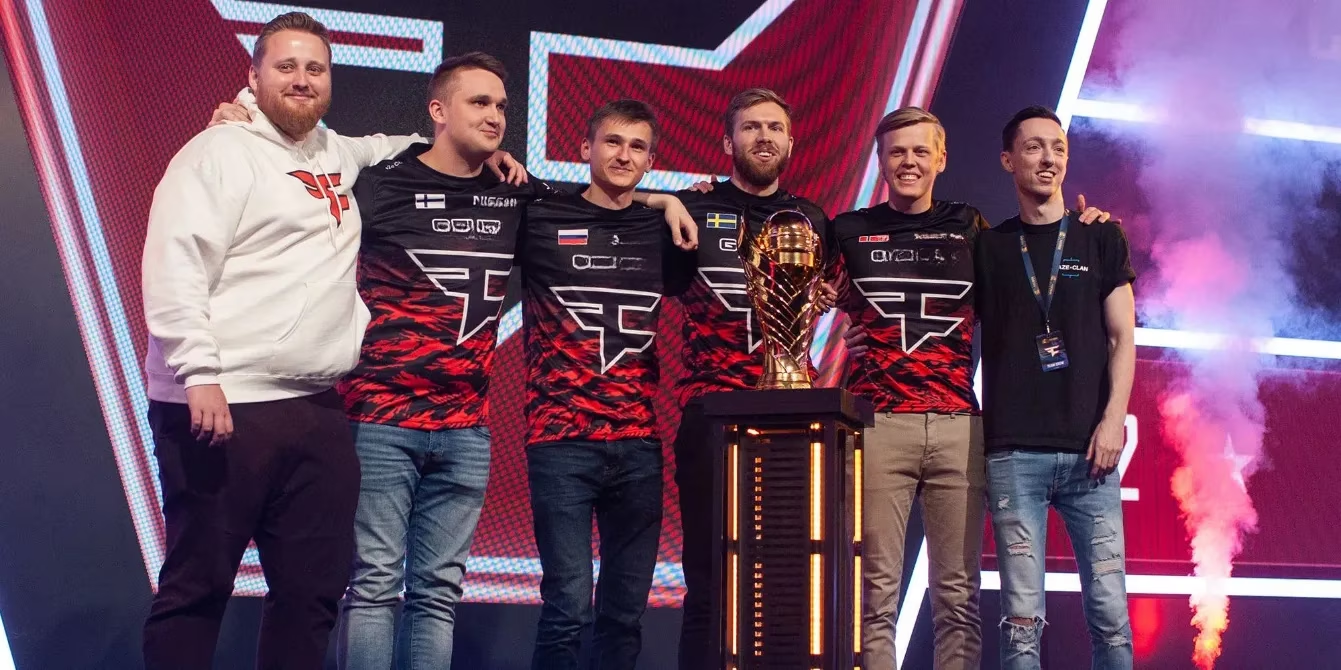
My fandom began, like for many, in the chaotic, hype-filled world of competitive gaming. But what I witnessed over the years was a masterclass in evolution. By the time of their public offering, I had come to understand that FaZe was a chameleon. Sure, they were the American esports powerhouse founded back in 2011, but their genius was realizing that the game was bigger than any single title. CEO Lee Trink’s quote always stuck with me: "It's a world where the most entertaining player has a more lucrative career than the best player." FaZe lived this. They built a multimedia empire where only 20% of their revenue came from traditional esports. The rest was a vibrant tapestry of content creation, merchandising that flew off virtual shelves, and YouTube channels that were destinations in themselves. They weren't just playing the game; they were creating the entire stadium, selling the jerseys, and broadcasting the show to an audience that, by 2026, has only grown more immense.
The real magic, though, was in the community and the star power. FaZe didn't just sign gamers; they curated a roster of cultural icons. The fact that current stockholders included music sensation Swae Lee, NFL superstar Kyler Murray, skateboarding legend Nyjah Huston, and the inimitable Pitbull was mind-blowing. It signaled a seismic shift. This was no longer a niche club for the digitally elite; it was a crossroads where sports, music, and internet culture collided. Trink’s analogy about the Harlem Globetrotters being more famous than the Lakers started to make perfect sense. FaZe had become the Globetrotters of the digital age—entertainers first, competitors second, and global phenomena above all.
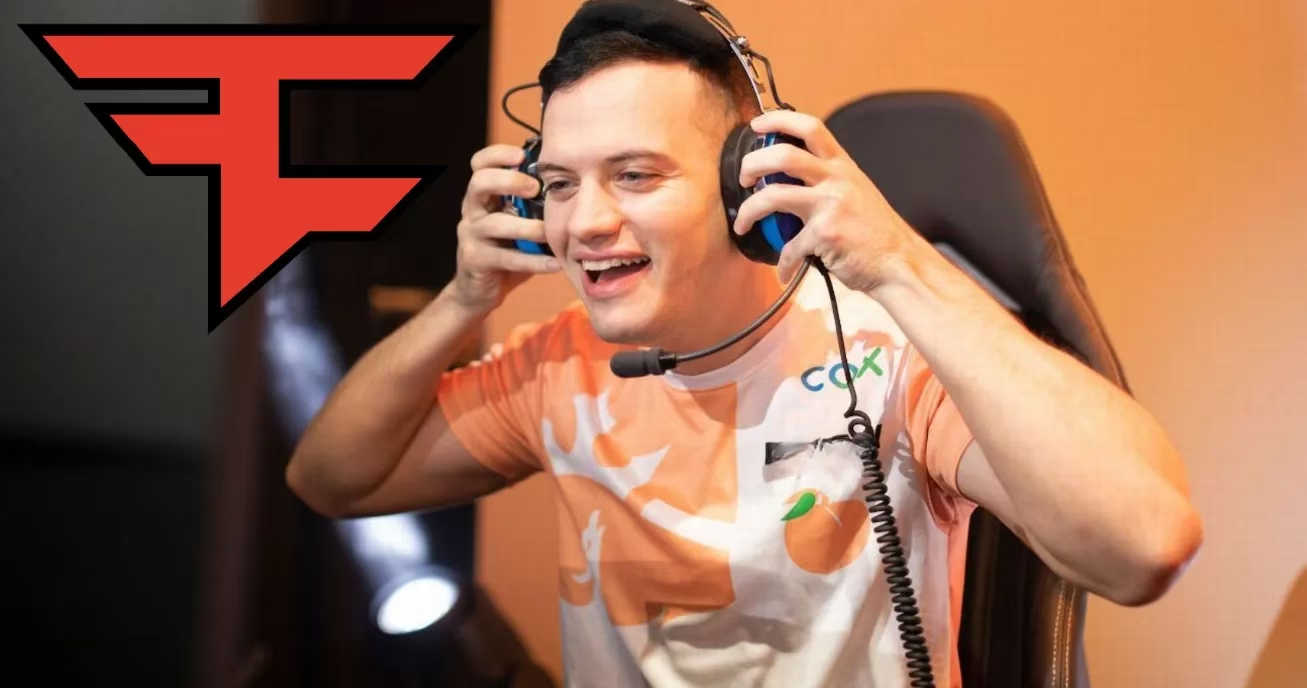
The Initial Public Offering (IPO) itself was framed as a revolutionary act for the fans. The announcement proclaimed it was a move to let the very community that built FaZe have a stake in its future. They pledged to remain a "digital content platform created for, and by, the Gen Z and Millennial generations." As a member of that generation, it felt empowering. It promised a new kind of ownership, both emotional and financial. This was their "starting line," as Trink called it, a launchpad for ambitions that stretched far beyond the leaderboard.
Of course, the path to Wall Street wasn't without its drama. I recall the controversy surrounding content creator Alissa Violet's lawsuit, where she claimed she was owed shares in the company. It was a stark reminder that behind the glamorous highlights and brand deals, there were complex business dealings and growing pains. It showed the world that this new frontier of influencer-led conglomerates was still writing its own rules. Yet, FaZe navigated it, and by 2026, such structures for creator equity have become far more standardized and transparent, partly because of pioneers like FaZE charting the course.
Fast forward to today, in 2026, and FaZe Clan's vision has expanded in ways that both surprise and feel inevitable. Their strategy, as outlined years ago, focused on four pillars that have now flourished:
-
Strategic Partnerships 🔗: From the early days with McDonald's, they've moved into deeper integrations with fashion houses, tech giants, and even film studios, creating limited-edition product drops and original content series.
-
Social Media Dominion 📱: Their follower count, which was already in the hundreds of millions, has become a truly decentralized network of influence, spanning emerging platforms we couldn't have imagined five years ago.
-
Merchandising Revolution 🛍️: Their apparel line has evolved into a full-fledged lifestyle brand, collaborating with high-end designers and utilizing augmented reality for virtual try-ons and digital wearables in metaverse spaces.
-
Content Universe Expansion 🎬: They've launched their own streaming channels, podcast networks, and even dabbled in interactive storytelling, turning their creators' personalities into narrative franchises.
The landscape has changed. The lines between gamer, influencer, and entrepreneur have completely blurred. New teams have risen, trying to emulate the FaZe blueprint, but the clan's first-mover advantage and authentic connection to its roots have given it staying power. They proved that a brand born from a passion for gaming could become a lens through which a generation views entertainment, community, and even investment.
Reflecting on it all, I see FaZe Clan's journey not just as a business success story, but as a cultural roadmap. They took the raw, competitive energy of esports, fused it with the connective power of social media, and wrapped it in the aspirational glow of celebrity, creating a new model for what a modern media company could be. From my perspective as a fan who has grown up alongside them, their billion-dollar leap wasn't an ending or a sell-out. It was, just as they promised, a new beginning—a starting line for the next era of digital-native entertainment. And in 2026, that race is more exciting than ever. 🚀
Comments