Flashpoint esports tournament's pivotal 2026 shift to an online competitive format, driven by global health challenges, redefined digital competition and ensured player safety.
In the ever-evolving world of competitive esports, adaptability is not just a strategy; it's a necessity for survival. Flashpoint, a prominent name in the global esports arena, found itself at a critical crossroads in 2026. Following the established protocols of modern esports organizations, Flashpoint made a pivotal decision that would define the trajectory of its inaugural season. The organization chose to temporarily postpone its live matches, opting instead for a fully online competitive format. This move, initially considered a cautious adjustment, became a defining moment in the tournament's history, reflecting a broader trend in how global events reshape the digital competition landscape.
The initial plan, announced on March 8, had been a compromise—an attempt to preserve the live event spirit by relocating all operations to a centralized venue in Los Angeles while implementing stringent health precautions. However, the persistent and unpredictable nature of global health challenges in the mid-2020s necessitated a more decisive action. The safety of players, staff, and the extended community became the unequivocal priority, leading to the full transition to remote play.

This shift was not made in isolation. It mirrored official guidance from leading health authorities, including updated recommendations from the U.S. Center for Disease Control and Prevention (CDC), which continued to advise against large in-person gatherings. The decision underscored a new reality for mass events: virtual spaces were becoming the primary arena for connection and competition. For the teams—already assembled in Los Angeles—this meant a sudden change in their competitive environment. They would remain in their temporary homes, but the battleground moved from a roaring stadium to the digital realm of their gaming setups.
The conclusion of the first round in Phase 1 of the group stage served as the final curtain call for the live event. Teams like Cloud9 and Dignitas had already provided a taste of the high-level action to come. Cloud9, in particular, showcased remarkable resilience, engineering a stunning comeback after a loss on the map Nuke to secure a 2-1 series victory over FunPlus Phoenix. Meanwhile, Dignitas opened their Group C campaign with a solid 2-1 win against Orgless, signaling their intent to compete for the top spot.
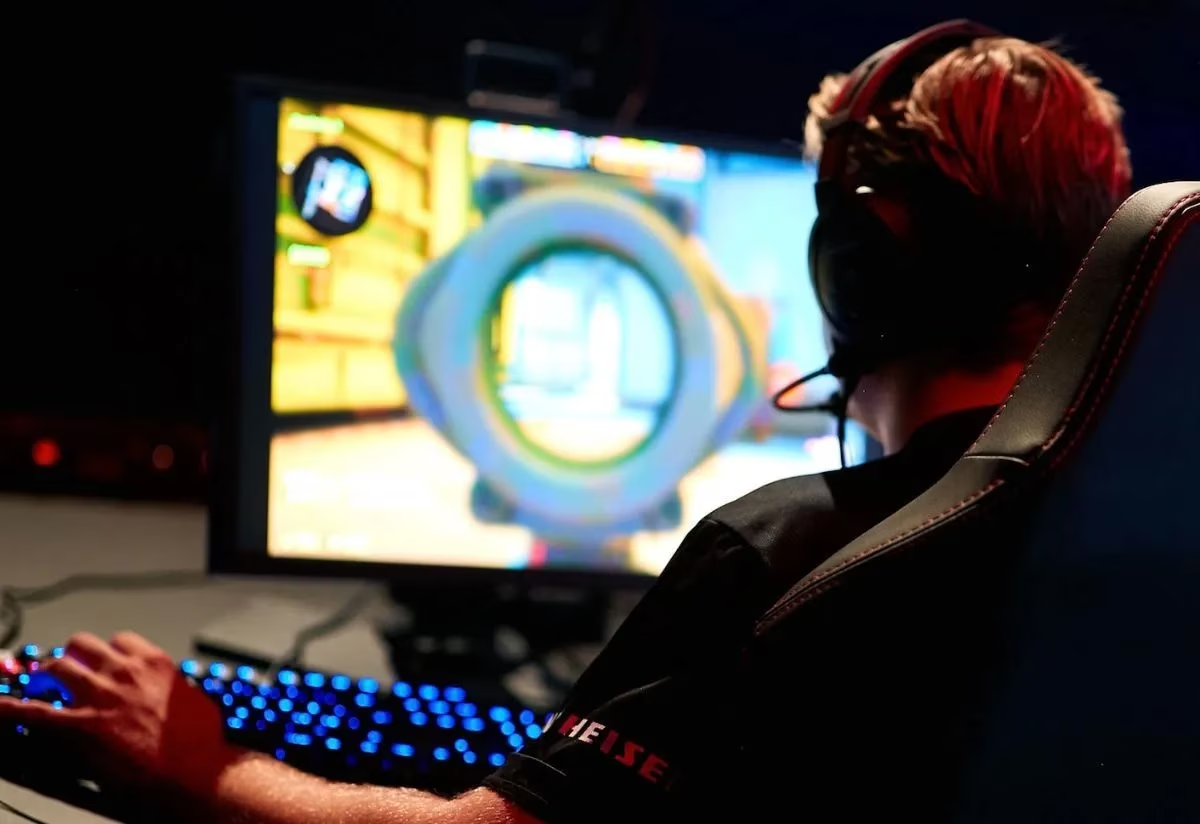
However, the pause button was hit as Phase 2 was put on hold. The tournament organizers faced a unique set of logistical and competitive integrity hurdles that are inherent to online play 😓. The challenges were multifaceted:
-
Competitive Integrity: Ensuring a level playing field was paramount. The implementation of robust anti-cheat software was a critical, yet just one part, of this complex puzzle.
-
Network Parity: Perhaps the most significant hurdle was guaranteeing all players had access to similar, low-latency internet connections. In a game where milliseconds can determine the outcome of a round, even minor discrepancies in ping could unfairly sway results.
-
Operational Coordination: Managing referees, broadcasts, and player communication across multiple remote locations required a completely new operational blueprint.
The tournament structure, fortunately, remained intact despite the format change. The scoring system for Phase 2 was designed to be identical to the first phase, ensuring competitive continuity:
| Final Group Placement | Points Awarded |
|---|---|
| 1st Place | 150 points |
| 2nd Place | 115 points |
| 3rd Place | 50 points |
| 4th Place | 30 points |
Based on the total points accumulated across both phases, the top eight teams would advance to a high-stakes, double-elimination playoff bracket. The ultimate goal for every player and organization involved was a share of the impressive $1 million prize pool. While the exact distribution of this prize fund remained officially unspecified at the time of the transition, its sheer size added immense weight to every match, every round, and every clutch play.
The move to online competition, while born of necessity, opened a fascinating chapter for Flashpoint. It tested the infrastructure of modern esports and the mental fortitude of its competitors. Players were no longer feeding off the energy of a live crowd; they had to generate their own momentum, maintain focus amidst the distractions of a home environment, and collaborate with teammates through voice chat alone. For viewers, the spectacle changed too. Broadcasts became more intimate, sometimes offering raw player communications and camera feeds from personal setups, creating a different, more personal connection with the competitors.
As the teams adapted to their new reality, the esports world watched closely. Flashpoint's journey became a case study in resilience and innovation. The organization's ability to pivot not only saved its inaugural season but also demonstrated a blueprint for future events facing similar disruptions. The race for the Flashpoint championship continued, albeit on a different track. The desire to win, the thrill of competition, and the pursuit of a million-dollar dream remained undimmed, proving that the heart of esports beats just as strongly online as it does on any live stage. The message was clear: the show must go on, and in the digital age, it always finds a way.
Comments