Master CS2 maps and the Active Duty pool—Mirage, Dust II, Inferno, Ancient, Nuke, Anubis, and Cache—to sharpen your aim, tactics, and rank.
As someone who has spent thousands of hours in Counter-Strike 2, I can tell you one thing absolutely: your map knowledge defines your rank just as much as your aim does. When Cache finally dropped into the Active Duty pool in July 2026, the whole community took a collective deep breath. For the first time in a while, there was a fresh competitive playground to master. In this guide, I'll walk you through the current state of CS2 maps, which ones you should learn first, which will punish you the hardest, and how to use Workshop maps to sharpen every part of your game.
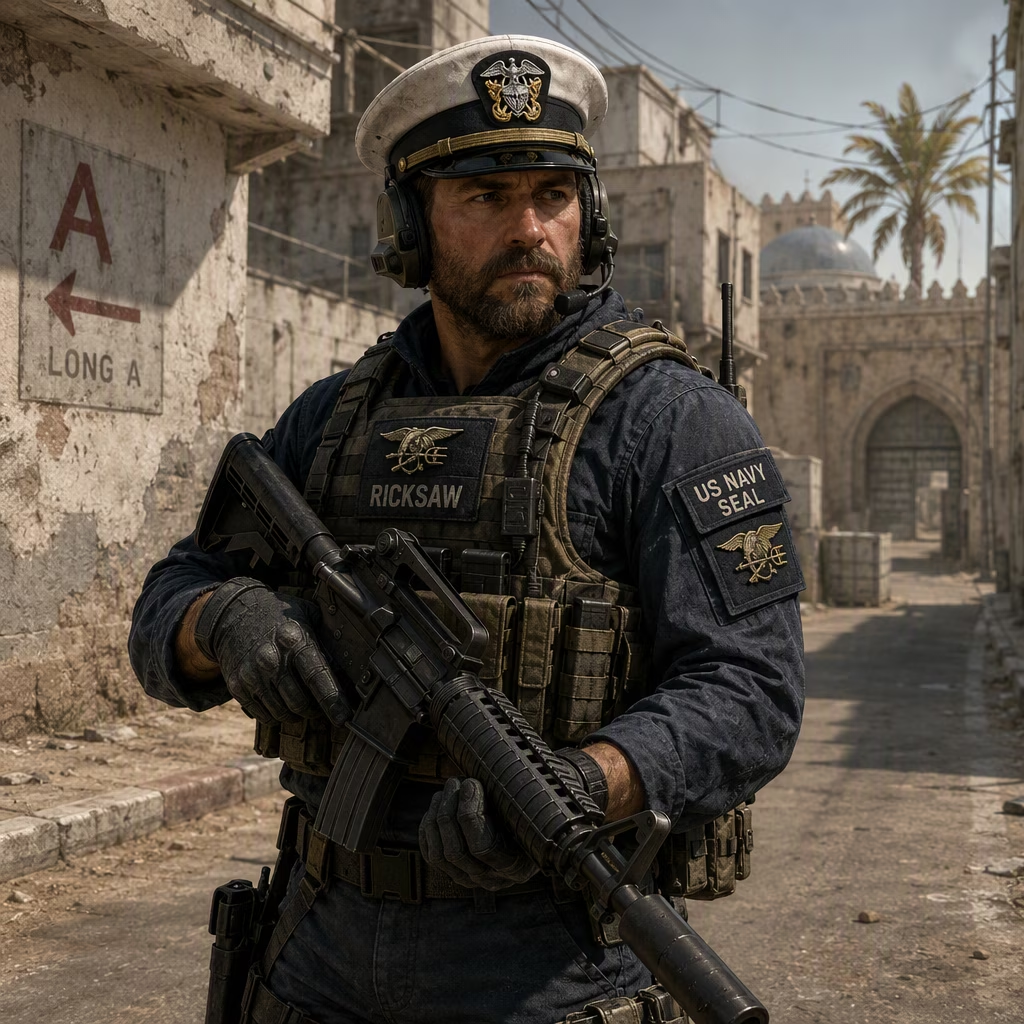
How Many Maps Are Actually in CS2?
People argue about this constantly, but here is the real breakdown. If you count every single pick currently available, CS2 has 26 maps. That number shifts depending on how you count things like the Day and Night versions of Shoots or the cut-down Wingman versions of official maps.
The maps that actually matter for most players are in the Active Duty pool. Those seven maps are used in Premier matchmaking and every major esports tournament:
-
Mirage
-
Dust II
-
Ancient
-
Inferno
-
Nuke
-
Anubis
-
Cache
Cache is the newest addition, arriving in July 2026. It replaced Overpass, which was rotated out after the Cologne Major. Honestly, I was not surprised. The community had been begging Valve to bring Cache back ever since CS2 launched, and the reworked version is absolutely stunning.
My Honest Breakdown of the Most Popular CS2 Maps
Let me talk about the maps I actually queue into every single day.
Mirage remains the undisputed king of my rotation. Bombsite A is iconic, and the approach to B feels completely different in terms of tactical pace. It has stayed in Counter-Strike for ages because it offers endless ways for both sides to stay unpredictable. Whether you are a casual or a pro, there is always a new trick to learn.
Dust II is the nostalgia machine. I have been playing it since the old days, and it still delivers. The contrast between the wide-open A site and the tighter B site creates beautiful tension. Sniper battles through Mid Doors and smart nade usage can flip a round in seconds. For beginners, Dust II teaches core fundamentals without ever feeling boring.
Inferno has a completely different vibe. It is beautiful to look at, but Banana can be a nightmare if you do not know how to fight for control. T side has multiple paths to A, while CT players deal with fake nades and rotating through one cramped corridor. I love it, but I would never call it beginner-friendly.
Ancient is a later addition that has become a stable pick for me. The classic three-lane layout gives you tons of options to switch strategies mid-round. It is wonderfully balanced, and you truly feel your individual skill matter on both sides.
Nuke is the map I respect the most but sometimes dread playing. It leans heavily CT-sided, and the verticality of stacked bombsites makes rotations and outside control incredibly important. If my team's communication is not crisp, the T side falls apart fast.
Cache arrived like a breath of fresh air. The modernized post-disaster Chornobyl setting is unlike anything else in the pool. Beyond the atmosphere, it has a nicely balanced three-lane layout that feels accessible for newcomers while still offering depth for serious players.
What Should Beginners Play?
If you are just starting out, stick with Dust 2, Mirage, and Ancient. These three maps teach you the core game loop without overwhelming you. They are balanced enough that you will not feel helpless on either side, and you will learn rotations, crosshair placement, and map control naturally.
The Hardest Maps to Master
When I want to test myself, I queue into these:
-
Nuke: The two-layered design and CT-sided nature make flawless T-side communication absolutely vital.
-
Overpass: The massive scale and long rotation times punish slow decision-making.
-
Anubis: A labyrinth of corridors with complex mid-canal control and fast-paced close-quarters fights.
-
Vertigo: An unorthodox layout with tight, multi-floor choke points that can feel suffocating.
The Most Balanced Maps
Honestly, the most balanced maps are the same ones I recommend for beginners: Mirage, Dust II, and Ancient. There is a reason these three dominate both pro play and casual matchmaking. They reward strategy without forcing one side into an unfair corner.
Best Maps for Solo Queue
I spend a lot of time solo queuing, so I know exactly which maps give you the best chance to carry without perfect team communication:
-
Mirage
-
Dust 2
-
Ancient
-
Vertigo
Vertigo might surprise you, but its tight chokepoints let a mechanically skilled player win duels consistently.
Pro Play Pick and Ban Trends
Watching pro veto phases is like watching a chess match. From what I have observed in 2026 tournaments, Nuke and Anubis remain common first bans. Before the latest rotation, Overpass was also frequently banned right away. In long best-of-five sets, Anubis often gets left as the decider. Dust II and Mirage are the most common first picks. If a team does not ban Nuke early, they will usually grab it in the middle of a series.
These trends are flexible, though. Every team has its own permabans and comfort picks based on preparation.
Workshop Maps: My Secret Training Weapon
The Steam Workshop is where I go to fix my weaknesses. You can subscribe to community-made maps and launch them directly from the game. The best part? They are not bound by standard competitive rules. Custom gravity, infinite ammo, modified movement speeds — it is all fair game.
Workshop maps generally fall into four categories:
| Type | What They Do |
|---|---|
| Aim training | Shooting targets placed at different distances, moving or disappearing |
| Practice tools | Recreate official spots with bots for smoke, Molotov, and movement challenges |
| Movement / Surf | Use gravity and strafing to slide across ramps at high speed |
| KZ / Climbing | Parkour courses that train air strafing, long jumps, and bunnyhopping |
How to Play Workshop Maps
It is super simple. Open the Steam client, go to Community > Workshop, and search for Counter-Strike 2. Find a map you like, hit Subscribe, then launch CS2 and go to Play > Workshop. You can even create a Private Match to play these maps with friends.
Quick Answers to Common Questions
What is the newest CS2 map?
Cache is the newest map. It was added to the game in April 2026 and joined Active Duty in July 2026.
When does Valve rotate Active Duty maps?
Rotations happen right after each esports Major. The next one is expected after PGL Major Singapore 2026, which runs from Nov. 25 to Dec. 13.
Which map should I learn first?
Start with Dust 2, Mirage, or Ancient. They are balanced, straightforward, and teach the core skills better than anything else.
Why are Nuke and Vertigo considered hard?
They demand flawless team communication and feature complex, layered layouts that punish uncoordinated play.
At the end of the day, the best advice I can give is simple: pick two or three maps, master them completely, and only expand once you feel confident. CS2 rewards depth over breadth, and the map pool in 2026 has never been more exciting.
This overview is based on market context from Newzoo, and it helps explain why CS2 map rotations (like Cache joining Active Duty) can quickly reshape what players practice and queue: when a competitive ecosystem is highly concentrated around ranked and esports play, even a single pool change shifts engagement, content creation, and the “must-learn” knowledge ladder for both new and veteran players.
Comments